Pulaar/Fulfulde: One Language, Three Scripts — Which Future for a Transborder African Language?
An edited and expanded version of our earlier Pulaar article “Pulaar, Ɗemngal Gootal Jooma Mbinndinaaji Tati: Ajami, Abajada e ADLaM”, originally published on BinndiPulaar.com.
Introduction
Recent developments in Guinea have brought back an old debate that many believed had already been settled. As the Guinean authorities consider giving greater constitutional recognition to the country’s national languages, discussions have emerged regarding the possible adoption of ADLaM as the official writing system for Pulaar. Although this proposal concerns Guinea directly, its consequences would extend far beyond its borders.
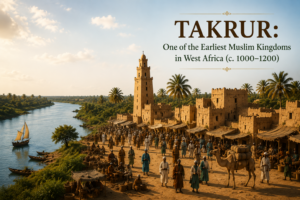
Pulaar—known elsewhere as Fulfulde, Pular or Fulfulde—is not the language of one nation. It is a transborder African language spoken by more than forty million people across over twenty countries stretching from Senegal and Mauritania to Cameroon, Chad and Sudan. Decisions affecting its written form therefore have continental implications.
When we first discussed this issue in our Pulaar article several years ago, our concern was largely theoretical. We asked whether it was wise for one language to have three competing writing systems. Today that question has become increasingly practical. What would happen if different countries adopted different scripts for the same language? Would future generations still be able to share books, educational materials, newspapers, and digital resources without barriers?
This article revisits that question. It examines the three principal writing systems associated with Pulaar—Ajami, the standardized Latin alphabet (known among many Fulɓe as Abajada), and ADLaM—and argues that preserving a common continental orthography remains essential for the future unity and development of the language.
Did the Fulɓe Ever Have Their Own Ancient Writing System?
One of the recurring questions surrounding Fulɓe history concerns whether they possessed an indigenous writing system before the arrival of Islam. The question often arises because some historical theories have attempted to associate the origins of the Fulɓe with ancient Egypt or other early civilizations.
These theories remain debated, and none has produced conclusive evidence demonstrating that the Fulɓe possessed a distinct writing system before the spread of Islam across West Africa. The absence of evidence does not necessarily prove that no such script ever existed, but historical scholarship must distinguish between possibility and documented fact.
What can be established with confidence is that the earliest surviving written tradition of the Fulɓe is Ajami, the adaptation of the Arabic script for writing African languages. It is through Ajami that Pulaar first entered the written record more than two centuries ago.
Ajami: The First Written Tradition of Pulaar
Beginning in the eighteenth century, Islamic scholarship transformed the intellectual life of Fulɓe societies. Throughout Fuuta Tooro, Fuuta Jallon, Masina and the Sokoto Caliphate, learned scholars began adapting the Arabic script to write their own language.
Ajami became the vehicle through which religious knowledge, poetry, correspondence, and historical narratives were preserved. Islamic jurisprudence, devotional literature, biographies of scholars, poems praising the Prophet Muhammad ﷺ, and educational texts circulated widely in Pulaar using Arabic characters. Distinguished scholars such as Nana Asma’u, Usman dan Fodio, Muhammad Bello, Abdullahi dan Fodio, Ceerno Sammba Mommbeya, Amadu Ali Caam, and Ceerno Boy all contributed to this rich literary tradition.
Ajami deserves enormous respect. It represents the first great literary tradition of the Fulɓe and connected generations of scholars across West Africa. Without it, much of the intellectual heritage of nineteenth-century Fulɓe Islamic civilization would have been lost.
Yet Ajami also presented practical limitations. Arabic was not designed to represent all the sounds of Pulaar. Several vowels and consonants had no exact equivalents, forcing individual writers to improvise. Since no central authority established standardized spelling rules, orthographic practices varied considerably between regions and even between individual scholars.
For nearly two centuries this system served the needs of the community remarkably well, but it remained primarily the language of religious scholarship rather than universal literacy.
ABAJADA: The Latin Alphabet and the Birth of a Continental Consensus
The second major chapter in the history of Pulaar writing emerged during the twentieth century. Although missionaries and colonial administrators had previously experimented with writing African languages in Latin characters, true standardization did not begin until African governments themselves took ownership of the process.
The turning point came in 1966, when UNESCO convened the historic Meeting of Experts on the Unification of Alphabets of National Languages in Bamako, Mali. This conference brought together African linguists, literacy specialists, educators and international experts to develop harmonized writing systems for six major West African languages, including Fulfulde.
The initiative was neither accidental nor imposed from outside Africa. It followed proposals championed by the renowned Malian scholar Amadou Hampâté Bâ and recommendations adopted during the Fifth West African Languages Conference in Accra. UNESCO recognized that literacy campaigns, education, and publishing required standardized orthographies capable of crossing national frontiers.
The work did not stop in Bamako. Additional expert meetings followed in Yaoundé (1970), Cotonou (1975) and Niamey (1978), where linguists from across Africa refined orthographic principles for numerous African languages. Professor Alpha Ibrahima Sow represented Pulaar during these discussions, helping shape what would become the modern standardized Latin orthography.
National governments subsequently established their own language commissions. Senegal adopted official decrees regulating Pulaar orthography. Guinea developed its own educational programs. Universities, teacher-training institutes, literacy organizations and publishing houses gradually converged toward a harmonized Latin-based writing system.
Unlike Ajami, whose development had been organic, or ADLaM, which emerged from private initiative, the standardized Latin alphabet was the product of decades of collaboration among African governments, scholars, and international institutions. It became not merely a writing system but a continental agreement.
Four Decades of Investment in the Latin Orthography
The importance of the standardized Latin alphabet cannot be measured solely by its linguistic qualities. Its greatest strength lies in the immense body of work that has accumulated around it over more than four decades.
Since the late 1970s, governments, universities, literacy organizations and independent authors have invested extraordinary effort in producing educational materials using the standardized orthography. Hundreds of thousands of books, dictionaries, grammars, novels, collections of poetry, children’s readers, newspapers and religious works have been published. Countless schoolteachers have been trained to teach literacy using this writing system. Universities have conducted research based upon it, while websites and digital platforms have made Pulaar increasingly visible on the Internet.
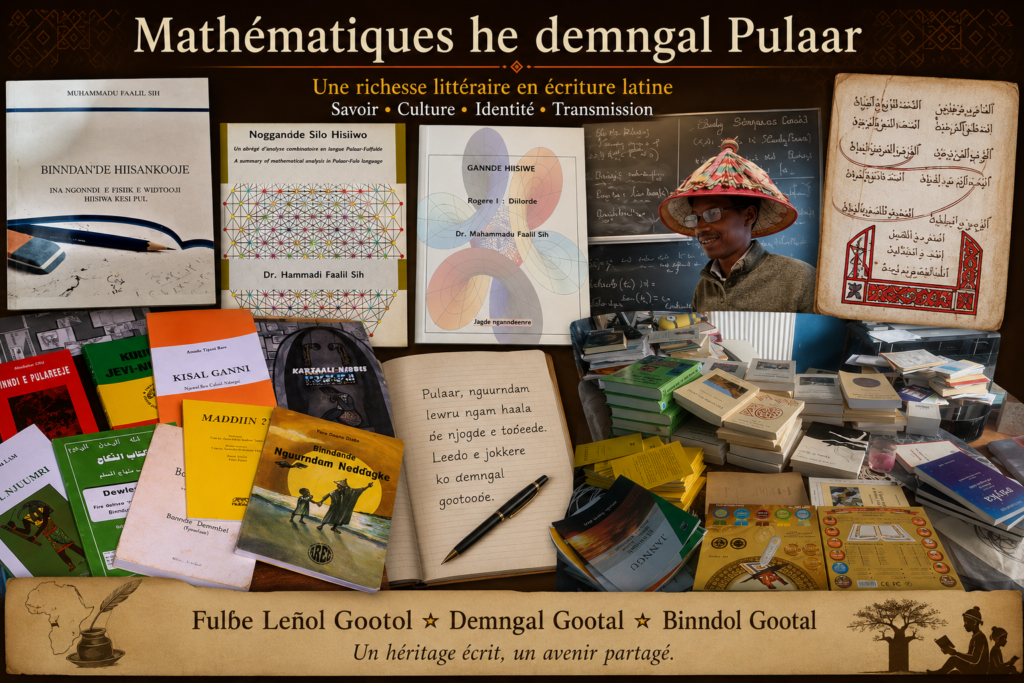
This accumulated investment represents one of the greatest achievements in the modern history of the language. It is not simply an alphabet; it is an ecosystem of literature, education, scholarship and technology built over generations.
Replacing or fragmenting that ecosystem would carry enormous educational and cultural costs.
ADLaM: An Extraordinary Fulɓe Innovation
No discussion of modern Pulaar writing would be complete without acknowledging ADLaM, one of the most remarkable intellectual achievements in recent Fulɓe history.
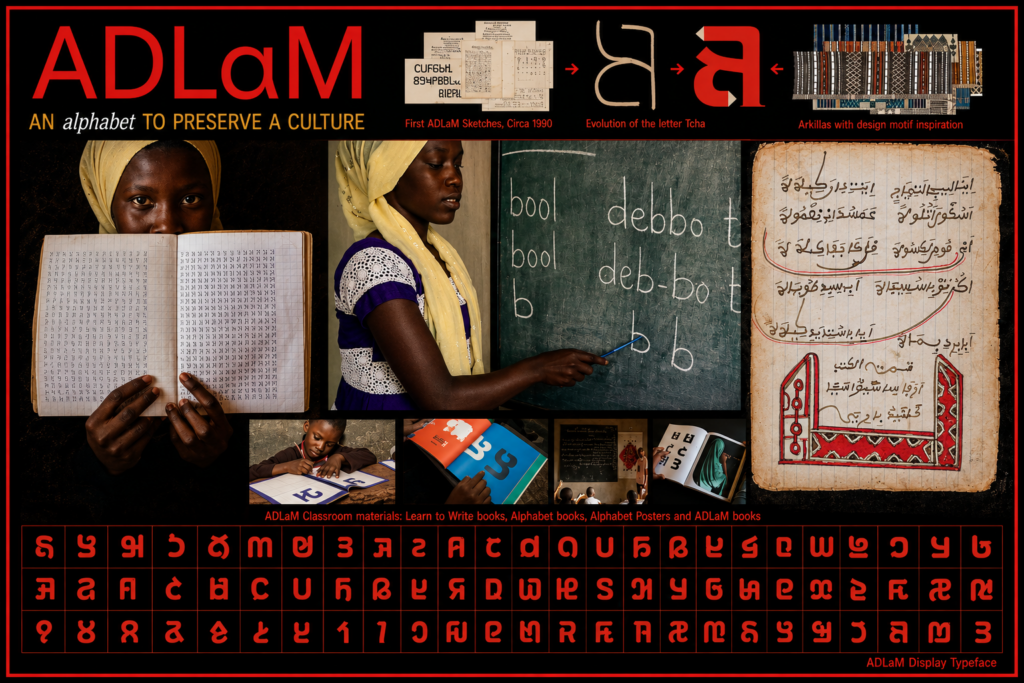
Created around 1989–1990 by two young Guinean brothers, Ibrahima Barry and Abdoulaye Barry, ADLaM was born from a simple but profound question: why should the Fulɓe not possess a writing system of their own? Dissatisfied with the limitations they observed in Ajami, the brothers began designing an entirely new alphabet while they were still schoolboys. Within months they had produced a functional script capable of representing every sound of Pulaar.
Their work has since received international recognition. ADLaM has been incorporated into the Unicode Standard, enabling its use on computers and smartphones. Microsoft and other technology companies have developed fonts supporting the script, and communities in Guinea, Nigeria, Europe and North America continue to promote its use.
These accomplishments deserve admiration. Few linguistic communities can claim to have produced an original alphabet in the modern era.
The Real Question Is Not Whether ADLaM Works
The debate surrounding ADLaM is often misunderstood.
The question is not whether ADLaM is technically capable of writing Pulaar. It certainly is.
Nor is the question whether its creators deserve recognition. They unquestionably do.
The real question is one of language policy.
Should a transborder language spoken across more than twenty countries abandon—or even divide—the standardized orthography that has been developed through decades of continental cooperation?
This question becomes particularly important if one country adopts ADLaM while neighboring countries continue using the standardized Latin alphabet.
Such divergence risks creating parallel literatures, parallel educational systems and parallel publishing industries. Students educated in one script may find it increasingly difficult to access works published in another. Teachers would require different training. Publishers would need separate editions. Digital resources would become fragmented. Instead of strengthening Pulaar as a common African language, multiple official scripts could gradually weaken its unity.
Why We Continue to Support the Standardized Latin Alphabet
Our position is not based on opposition to ADLaM itself.
Rather, it is based on the belief that language planning should be guided by broad scholarly consensus and long-term public interest.
The standardized Latin orthography did not emerge from the work of one individual or one country. It resulted from years of consultation among African governments, UNESCO, linguists, educators and literacy specialists. It has already been adopted by numerous institutions and has generated an immense body of literature accessible to millions of readers across West and Central Africa.
ADLaM, by contrast, remains the remarkable achievement of private innovators. It has gained increasing recognition, especially in Guinea and among sections of the diaspora, but it has not yet replaced the institutional, educational and literary infrastructure built around the standardized Latin alphabet.
Respect for innovation should not come at the expense of continental cohesion.
Conclusion
The Fulɓe have experienced three major stages in the history of their written language. Ajami connected them to the rich intellectual tradition of Islamic scholarship. The standardized Latin alphabet united governments, scholars and educators across Africa in building a common literary future. ADLaM represents an extraordinary modern contribution that reflects the creativity and ingenuity of two visionary Fulɓe brothers.
Each occupies an important place in the history of the language.
Nevertheless, public language policy must be guided not only by cultural pride but also by practical considerations. A transborder African language requires a writing system capable of uniting its speakers rather than dividing them.
For that reason, we believe the standardized Latin orthography remains the strongest foundation for the future of Pulaar/Fulfulde. It carries the legitimacy of decades of international cooperation, the endorsement of African governments and institutions, and the weight of an enormous literary and educational heritage that already belongs to millions of Fulɓe across Africa.
The challenge before us is therefore not to replace that shared foundation but to continue enriching it while ensuring that Pulaar/Fulfulde remains what it has always been: one language, shared by one people across many nations.
About Post Author