Macky Sall Withdraws from UN Race as Security Council Deadlock Deepens
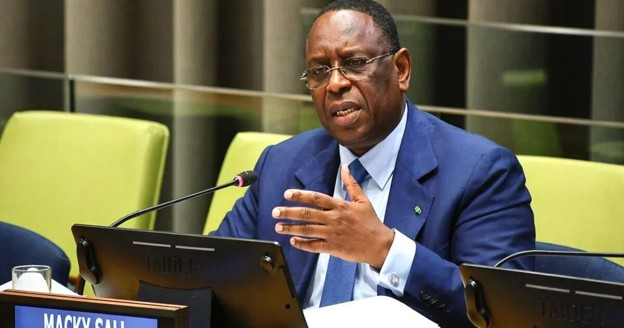
Former Senegalese President Macky Sall has withdrawn his candidacy for United Nations Secretary-General, bringing to an end a months-long diplomatic campaign that struggled to overcome declining support inside the Security Council, opposition from permanent members and a broader preference for a Latin American—and possibly female—successor to António Guterres. His departure, however, does little to resolve a contest in which no candidate has yet secured the consensus required among the world’s major powers.
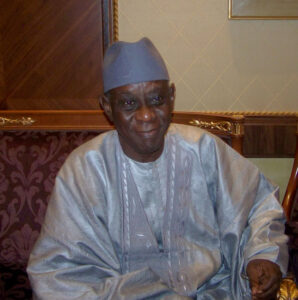
Former Senegalese President Macky Sall announced on Saturday, October 17, that he was withdrawing from the race to become the next Secretary-General of the United Nations, one day after the latest informal vote of the UN Security Council exposed the increasingly difficult path facing his candidacy.
Sall presented his decision as an effort to facilitate consensus. Following consultations with Burundi’s President Évariste Ndayishimiye, current chair of the African Union, and Senegalese President Bassirou Diomaye Faye, current chair of ECOWAS, Sall said he had decided to withdraw “with a deep sense of responsibility,” hoping his departure would contribute to the emergence of a consensus candidate within the Security Council. But behind the diplomatic language lies a straightforward political reality: the numbers had turned decisively against him.
A Straw Poll That Changed the Equation
The October 16 straw poll was particularly important because, for the first time in this selection process, the ballots of the five permanent members of the Security Council—the United States, China, Russia, France, and the United Kingdom—were distinguished from those of the ten elected members.
That distinction matters enormously. Under Article 97 of the UN Charter, the Secretary-General is appointed by the General Assembly upon the recommendation of the Security Council. A successful candidate therefore ultimately needs at least nine affirmative Council votes while avoiding a negative vote from any of the P5.
The result was bad news for Sall.
He received only five “encourage” votes against ten “discourage” votes. More significantly, three of those discouragements came from permanent members. Although a “discourage” ballot in a straw poll is technically not a formal veto, three P5 objections represented a formidable diplomatic barrier to his candidacy.
Sall’s withdrawal was therefore not simply the consequence of one disappointing ballot. It reflected a trend in which his candidacy had failed to build sufficient momentum as the selection process advanced.
Rather than remain in a race where the possibility of overcoming several P5 objections appeared increasingly remote, Sall chose to withdraw and frame his departure as a contribution toward breaking the Security Council’s deadlock.
The Regional Factor: Was It Latin America’s Turn?
A second obstacle was geopolitical rather than personal.
There is no binding rule requiring the UN Secretary-Generalship to rotate from one geographical region to another. Nevertheless, regional rotation has become an important political consideration in the selection process. Latin America and the Caribbean have increasingly been viewed as the region with the strongest claim to succeed António Guterres of Portugal.
Sall himself acknowledged this factor in explaining his withdrawal. He noted that successive straw polls appeared to demonstrate a preference for a candidate from Latin America and the Caribbean, possibly a woman. That placed an African candidate such as Sall at a structural disadvantage regardless of his experience. It also explains why three of the strongest remaining candidates—Costa Rica’s Rebeca Grynspan, Guyana’s Carolyn Rodrigues-Birkett, and Argentina’s Rafael Grossi—have emerged from Latin America and the Caribbean.
The Growing Pressure to Choose a Woman
There is another powerful factor shaping the 2026 contest: after more than 80 years and nine male Secretaries-General, the United Nations has never been led by a woman. The pressure for that to change has grown considerably.
Selecting a woman from Latin America and the Caribbean could therefore satisfy two longstanding aspirations simultaneously: geographical rotation and gender representation.
Sall himself recognized this reality when he referred to the emerging preference for a Latin American or Caribbean candidate who might also be female.
That trend clearly benefits candidates such as Rebeca Grynspan and Carolyn Rodrigues-Birkett.
But gender and geography alone will not decide the contest. A woman from Latin America still has to pass the most difficult test of all: obtaining sufficient Security Council support without being blocked by any permanent member. And so far, nobody has passed that test.
Why Is There Still No Winner?
This is perhaps the most important lesson from the October 16 vote. Macky Sall was not the only candidate facing a P5 problem. Every candidate did. Grynspan emerged as the numerical frontrunner with nine “encourage” votes, but she also received five “discourage” votes—including two from permanent members.
Rafael Grossi likewise received two P5 discouragements, as did Carolyn Rodrigues-Birkett. Sall, Olara Otunnu and María Fernanda Espinosa each received three, while Ivonne A-Baki was discouraged by all five permanent members.
The significance is considerable.
The Security Council does not simply need a candidate who can win a plurality against the others. It needs someone acceptable to all five veto-wielding powers.
That is extraordinarily difficult in today’s geopolitical environment.
Washington, Moscow, Beijing, London and Paris have different priorities concerning the future of the United Nations, its budget, peace and security, institutional reform and the Secretary-General’s political role.
The selection process has consequently become not merely a competition between individual candidates, but a search for a person whom five increasingly divided global powers can all tolerate.
What Happens If the P5 Cannot Agree?
There is no automatic winner simply because one candidate finishes first in the straw polls.
The informal ballots are designed to reveal where support and opposition lie and encourage candidates with little prospect of success to reconsider their campaigns.
Further straw polls can therefore be held while governments negotiate behind the scenes.
Positions can change. A permanent member that previously “discouraged” a candidate can later support—or at least cease opposing—that person.
But another possibility is becoming increasingly important: the emergence of a new candidate.
Both American and Russian representatives have left open the possibility that additional names could enter the contest, and diplomats have already discussed potential alternatives.
History provides an important precedent.
In 1996, the effort to select a successor to Boutros Boutros-Ghali remained deadlocked late into the year. New candidates entered after Boutros-Ghali’s candidacy was blocked, and Kofi Annan eventually emerged as the compromise choice. He was appointed on December 17—only two weeks before taking office.
The 2026 process could therefore move in a similar direction.
If none of the remaining candidates can eliminate P5 opposition, governments may begin searching more seriously for a compromise figure who has not yet formally entered the race.
Time, however, is narrowing. António Guterres’ second term ends on December 31, 2026, and his successor is expected to take office on January 1, 2027.
Sall’s Withdrawal: Defeat or Diplomatic Calculation?
For Macky Sall, withdrawal prevents a difficult campaign from turning into a prolonged diplomatic defeat.
His candidacy had significant assets: twelve years as president of Senegal, experience chairing the African Union, extensive relations with African, European and international leaders, and decades in public administration and politics.
But his campaign also faced an unusual challenge from the beginning.
Burundi sponsored his nomination, while efforts to transform that initiative into an undisputed African Union consensus candidacy encountered resistance from several African governments. Senegal itself only formally rallied behind its former president later in the campaign.
By the time Dakar gave Sall its unequivocal support, the broader dynamics of the race were already increasingly favoring Latin America and the Caribbean.
The October 16 vote finally made the diplomatic arithmetic difficult to ignore.
Withdrawal therefore allowed Sall to leave the contest on his own terms rather than wait for additional straw polls to confirm what had become increasingly apparent.
What Comes Next for Macky Sall?
That may now be the more interesting question.
Sall gave no indication that his withdrawal from the UN race meant withdrawal from international public life. Quite the opposite.
In his statement, he said he remained committed to the principles that motivated his candidacy: peace, security, economic and social development, international cooperation and dialogue among nations. He also argued that the United Nations requires profound reform and insisted that Africa must continue demanding its rightful place in global governance.
Those words suggest that the former Senegalese president intends to preserve an international role.
What form that role will take remains unknown. No new position has been announced, and speculation should therefore be distinguished from fact.
But Sall leaves the UN campaign with an international network reinforced by months of high-level diplomacy. His candidacy brought him back into direct engagement with African heads of state, international diplomats and governments represented on the Security Council.
That diplomatic capital does not disappear with his withdrawal.
He could remain active in African diplomacy, international mediation, development and climate initiatives, institutional reform or other multilateral assignments. Equally important will be the question of whether he chooses to devote greater attention to Senegalese and African political affairs.
For the moment, however, Sall appears determined to present himself less as a defeated candidate than as an African statesman stepping aside when the diplomatic numbers no longer offered a credible road to victory.
A Race Bigger Than Macky Sall
Ultimately, Sall’s withdrawal tells only part of the story.
The more consequential development is that the Security Council still does not have a candidate around whom its five permanent members can unite.
Rebeca Grynspan may lead the field numerically. Latin America and the Caribbean may possess a powerful argument based on regional rotation. The campaign for the first woman Secretary-General may be stronger than ever. But none of those factors overrides the political reality of the Security Council veto.
The next Secretary-General will therefore not necessarily be the candidate who begins with the broadest support. It may instead be the person who generates the least unacceptable compromise among Washington, Beijing, Moscow, Paris and London while still commanding at least nine votes in the Council. That person may already be among the remaining candidates or, as happened in the contest that ultimately produced Kofi Annan three decades ago, the deadlock may clear the way for someone whose name has yet to formally enter the race. Macky Sall has now removed his name from that equation.
The bigger question confronting the United Nations is whether his departure will help produce the consensus he says he stepped aside to facilitate—or simply confirm that the real contest for the world’s top diplomatic post has only just begun.
About Post Author