Macky Sall’s Bid for UN Secretary General: Africa’s Quest for Global Leadership
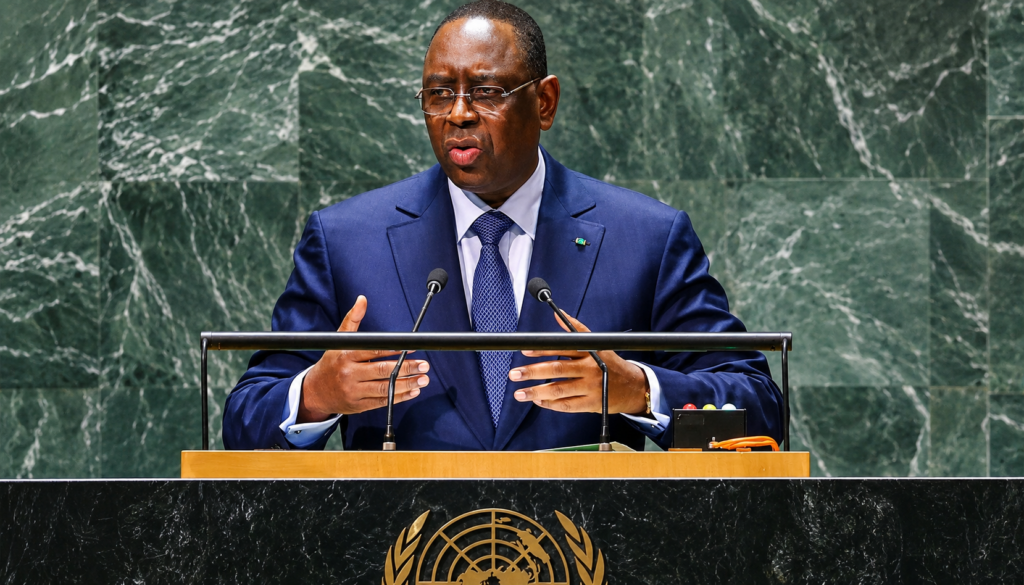
Former Senegalese President Macky Sall has entered one of the world’s most competitive diplomatic contests: the race to become the next Secretary-General of the United Nations. His candidacy has generated excitement across many parts of Africa, while simultaneously exposing deep political divisions within Senegal and the African Union. If elected, Sall would become not only the first Senegalese to lead the United Nations but also the first Muslim Secretary-General in the organization’s 80-year history.
The campaign has therefore become more than a personal political ambition. It is also a test of Africa’s diplomatic unity, Senegal’s domestic politics, and the continent’s ability to rally behind one candidate for one of the world’s highest international offices.
An Experienced International Statesman
Macky Sall served as President of Senegal from 2012 to 2024 after previously serving as Prime Minister, President of the National Assembly, and Minister of Mines and Energy. During his presidency, he became one of Africa’s most recognizable diplomatic figures.
Internationally, Sall played important roles in promoting peace, advocating debt relief for developing countries following the COVID-19 pandemic, supporting climate financing for Africa, and strengthening cooperation between Africa and major global powers. As Chairperson of the African Union in 2022, he represented the continent during a period marked by the war in Ukraine, food insecurity, terrorism in the Sahel, and debates over reforming global governance. These experiences have strengthened his credentials as a candidate capable of navigating the increasingly complex international environment.
His campaign has centered on reforming multilateral institutions, strengthening preventive diplomacy, promoting sustainable development, addressing climate change, improving peacekeeping operations, and giving greater representation to developing nations within the United Nations system. During his official interactive dialogue before UN member states, Sall emphasized the need to rebuild confidence in international cooperation and modernize the UN for today’s geopolitical realities.
A Historic Opportunity for the Muslim World
Since the establishment of the United Nations in 1945, the office of Secretary-General has been occupied by leaders from Norway, Sweden, Burma (Myanmar), Austria, Peru, Egypt, Ghana, South Korea, and Portugal.
Despite Muslims constituting nearly one-quarter of the world’s population and the Organization of Islamic Cooperation representing 57 member states, no Muslim has ever occupied the UN’s highest office.
For many observers across Africa, the Middle East, and the broader Muslim world, Macky Sall’s candidacy represents an opportunity to break that historical barrier. Senegal itself has long been viewed as a model of peaceful coexistence between Muslims and Christians, democratic transitions, and religious tolerance, making Sall’s background particularly appealing to countries seeking a consensus builder rather than an ideological figure.
Strong African Enthusiasm
Across much of Africa, Sall’s candidacy has been welcomed as an opportunity for the continent to once again occupy one of the world’s most influential diplomatic positions after Kofi Annan served as Secretary-General from 1997 to 2006.
Many African diplomats argue that the continent deserves another opportunity, particularly given Africa’s growing demographic importance and its central role in discussions concerning peacekeeping, development, migration, climate change, and global security.
Several African governments have expressed support for Sall’s campaign, viewing his experience and international profile as valuable assets. Burundi formally nominated him for the position, enabling him to officially enter the race, while other African countries have publicly voiced their backing.
The Biggest Obstacle: Africa Is Not Fully United
Ironically, Macky Sall’s greatest challenge may not come from competing international candidates but from within Africa itself.
The African Union has traditionally sought to unite behind a single candidate for major international positions. However, efforts to obtain formal African Union endorsement for Sall have encountered significant resistance.
Several member states questioned both the selection process and whether Africa should officially rally behind him without broader consultation. Consequently, the African Union has not granted him unanimous continental endorsement, leaving him to campaign without the powerful diplomatic advantage that such backing would have provided.
This division weakens Africa’s negotiating position and illustrates the continuing difficulty of achieving continental consensus even on issues where African representation appears desirable.
A Lack of Support at Home
Perhaps even more striking is the absence of support from Sall’s own country.
Following the 2024 presidential election that brought President Bassirou Diomaye Faye to power and Prime Minister Ousmane Sonko to the forefront of Senegalese politics, relations between the new government and the former president have remained tense.
The Senegalese government has publicly indicated that it did not sponsor or endorse Sall’s candidacy. Reports also suggest that Senegal’s diplomatic mission informed African Union officials that the government had not formally backed the former president’s campaign.
This unusual situation places Sall in the rare position of pursuing one of the world’s highest diplomatic offices without the unequivocal support of his own national government.
Domestic political controversies during his final years in office—including disputes over constitutional reforms, opposition protests, and governance issues—continue to influence perceptions of his candidacy both within Senegal and internationally. Supporters view these criticisms as part of ordinary democratic competition, while opponents argue they complicate his international image.
The Diplomatic Challenge Ahead
Even with strong credentials, becoming Secretary-General requires navigating an exceptionally difficult selection process.
The UN Secretary-General is appointed by the General Assembly upon recommendation of the Security Council. In practice, any of the five permanent members—the United States, China, Russia, France, or the United Kingdom—can effectively block a candidate through the veto process.
Candidates therefore must satisfy not only a majority of UN member states but also avoid opposition from any permanent Security Council member.
Geopolitical rivalries surrounding Ukraine, Gaza, Taiwan, climate negotiations, development financing, and Security Council reform mean that every candidate faces intense diplomatic scrutiny.
Factors Working in Sall’s Favor
Several factors strengthen Macky Sall’s campaign.
His long experience as head of state gives him familiarity with both African and global diplomacy.
His reputation as a moderate and pragmatic negotiator appeals to many governments seeking consensus rather than confrontation.
His leadership of the African Union during multiple international crises demonstrated his ability to engage simultaneously with Western governments, China, Russia, Gulf countries, and African leaders.
His advocacy for debt relief, development financing, and climate justice resonates strongly with many countries across the Global South.
His multilingual abilities and extensive diplomatic network further enhance his international profile.
Factors Working Against Him
At the same time, significant obstacles remain.
The absence of unanimous African Union endorsement deprives him of what has historically been a major diplomatic advantage.
The lack of formal support from Senegal complicates his campaign and raises questions among some member states.
Political controversies from his presidency continue to generate criticism among human rights organizations and political opponents.
Finally, the Secretary-General selection process itself remains highly unpredictable, with geopolitical bargaining among major powers often determining the eventual outcome more than public campaigning.
Why This Election Matters
Regardless of the final result, Macky Sall’s candidacy carries broader significance.
It reflects Africa’s growing confidence in producing leaders capable of managing global institutions.
It reopens discussions about regional rotation in the UN’s highest office.
It highlights calls for greater representation of both Africa and the Muslim world within international governance.
And it demonstrates how domestic politics increasingly intersect with international diplomacy.
Looking Ahead
Whether Macky Sall ultimately becomes Secretary-General remains uncertain. The coming months will involve intense diplomatic negotiations, informal consultations, and the Security Council’s confidential straw polls before the General Assembly makes its final decision.
If successful, he would make history as the first Senegalese, the first Muslim, and one of only a handful of African leaders to occupy the UN’s highest office. If unsuccessful, his campaign will nevertheless be remembered for reopening important debates about Africa’s role in global governance, representation within international institutions, and the future of multilateral diplomacy.
For many Africans, the campaign represents more than the ambitions of one former president. It symbolizes the continent’s continuing desire to move from the margins of international decision-making toward the center of global leadership. Whether Africa can unite behind that aspiration may ultimately prove as important as the outcome of the election itself.
About Post Author