Macky Sall Returns Home: A Crucial Dakar Stop on His Road to the United Nations
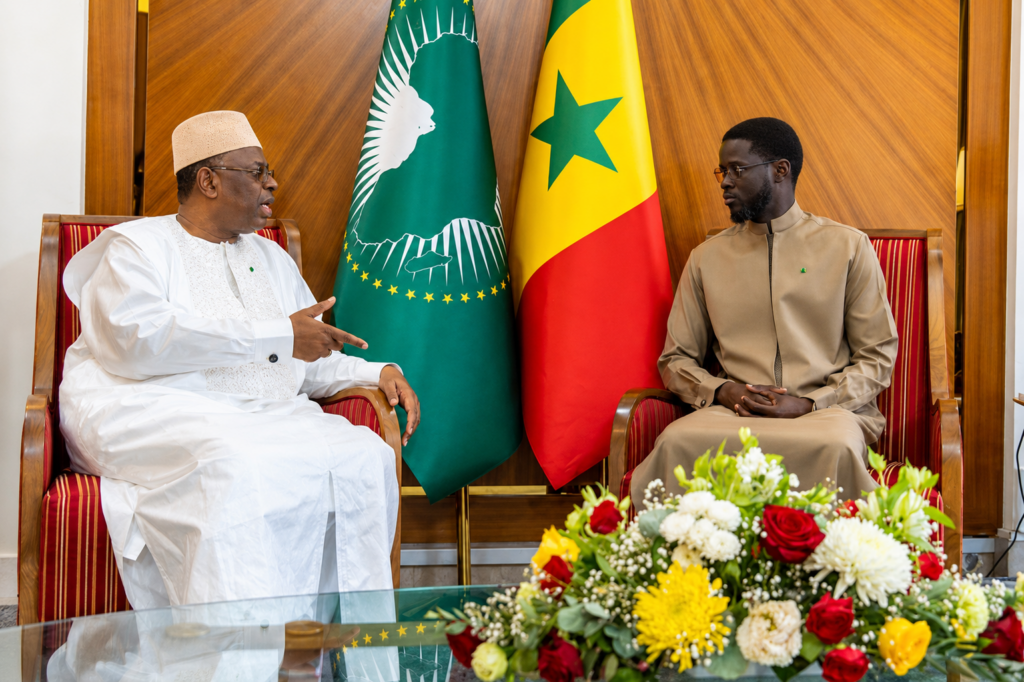
After more than two years away from the political stage in his homeland, former Senegalese President Macky Sall returned to Dakar on July 17, 2026, in what has become one of the most closely watched diplomatic events in Senegal this year. While officially brief, the visit carried significance far beyond a homecoming. It represented a critical step in Sall’s campaign to become the next Secretary-General of the United Nations, a position that would place both Senegal and Africa at the center of global diplomacy.
His visit was not merely a reunion with supporters nor an attempt to re-enter domestic politics. Rather, it was a carefully calibrated diplomatic mission aimed at demonstrating that, despite political differences at home, Senegal stands behind one of its own on the international stage.
A Return With National and International Significance
Macky Sall’s arrival in Dakar marked his first public visit to Senegal since leaving office in April 2024. During his short stay, the centerpiece of his agenda was a meeting with his successor, President Bassirou Diomaye Faye. According to Sall, the visit formed part of the international consultations he has undertaken in support of his candidacy for the leadership of the United Nations.
By meeting the current head of state, Sall sought to convey a message that transcended party politics: Senegal’s international interests are larger than domestic rivalries.
For observers abroad, the image of a former president respectfully received by his successor projects the maturity of Senegal’s democratic institutions. Such symbolism matters greatly in international diplomacy, where political stability and institutional continuity are often viewed as indicators of credibility.
Why Returning Home Matters
Although the selection of a UN Secretary-General is ultimately decided by the Security Council and the General Assembly, candidates derive significant legitimacy from the support of their own countries.
No candidate aspiring to lead the world’s largest international organization can afford to appear politically isolated at home. National endorsement sends an important diplomatic signal to UN member states that the candidate speaks with the confidence of his nation.
For Macky Sall, securing visible support from Senegal strengthens several aspects of his campaign:
- It reinforces his diplomatic legitimacy.
- It demonstrates national confidence despite political differences.
- It mobilizes Senegal’s diplomatic network in lobbying other countries.
- It reassures foreign governments that his candidacy reflects a national—not merely personal or partisan—ambition.
The Dakar visit therefore represented perhaps the most important domestic milestone in his international campaign.
Warm Reception Despite Political Divisions
Images from Dakar showed enthusiastic supporters gathering to welcome the former president as he arrived in the capital. Many national and international news outlets’ photographs captured crowds waving, cheering, and greeting Sall upon his return before his meeting with President Faye.
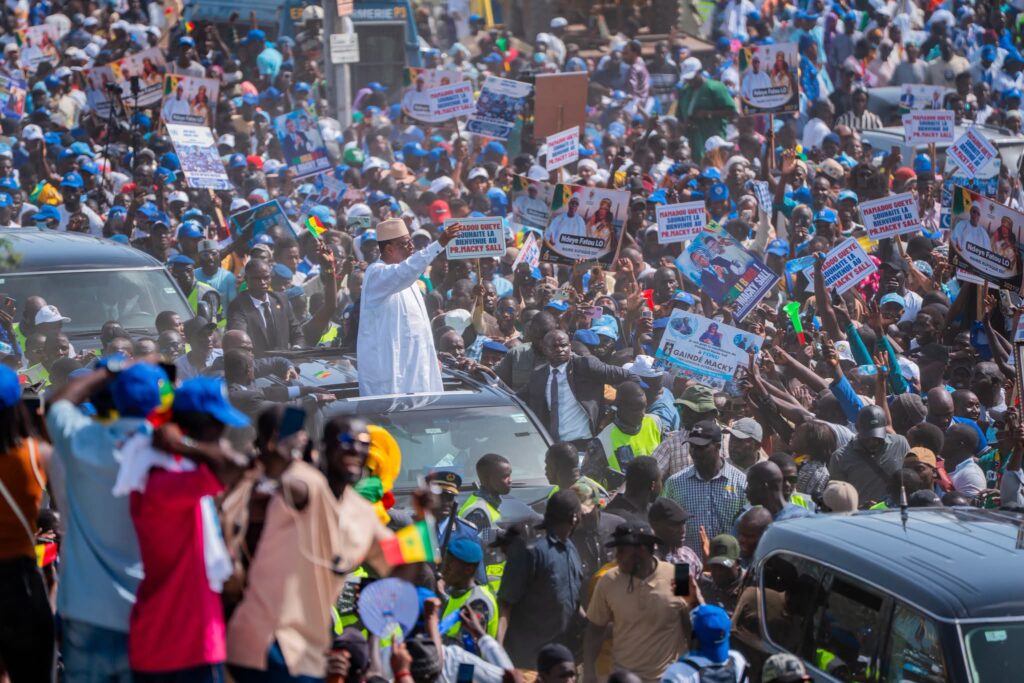
At the same time, Sall himself urged supporters not to organize an excessively large political mobilization, explaining that his schedule required him to leave immediately after meeting the president and promising to return later to meet party activists and sympathizers.
Nevertheless, reactions across Senegal remained mixed.
Many Senegalese viewed the visit as a moment of national pride, believing that regardless of domestic political disagreements, Senegal should unite behind one of its former heads of state when competing for one of the world’s highest diplomatic offices.
Others remained critical of Sall’s presidency, pointing to controversies surrounding his final years in office, including political unrest and ongoing debates over governance and public finances. Reuters notes that his attempted postponement of the 2024 election and subsequent investigations into public finances continue to shape public perceptions, although Sall denies wrongdoing.
This contrast illustrates the complexity of Senegalese politics: while opinions about Macky Sall remain divided, many citizens distinguish between internal political debates and the country’s international interests.
A Patriotic Rather Than Partisan Appeal
Leaders of Sall’s party, the Alliance for the Republic (APR), argued that supporting his candidacy should not be viewed through a partisan lens.
Their central message was straightforward:
Supporting Macky Sall’s candidacy is not support for a political party; it is support for Senegal.
According to the party, placing a Senegalese at the head of the United Nations would elevate the country’s diplomatic standing, expand its international influence, and strengthen relationships with organizations such as the WHO, UNICEF, and UNDP.
In this view, the candidacy belongs not only to Macky Sall or the APR but to Senegal as a whole—and, by extension, to Africa.
Why Africa Is Watching
Beyond Senegal, Macky Sall’s campaign carries continental importance.
If elected, he would become only the third African Secretary-General of the United Nations, following:
- Boutros Boutros-Ghali (Egypt)
- Kofi Annan (Ghana)
More significantly, Sall would become the first leader from Francophone sub-Saharan Africa to occupy the office.
For many African diplomats, this represents an opportunity to strengthen African voices within global governance at a time when the continent seeks greater representation in international institutions.
Throughout recent years, Sall has positioned himself as an advocate for African priorities, including:
- climate resilience;
- sustainable development;
- reform of global financial institutions;
- debt relief for developing countries;
- expanded African representation in global decision-making.
His leadership during the African Union’s successful campaign to secure the African Union’s permanent membership in the G20 significantly enhanced his international profile and remains one of his strongest diplomatic credentials.
A Meeting Above Politics
Perhaps the most symbolic moment of the visit was the meeting between President Bassirou Diomaye Faye and former President Macky Sall.
The encounter demonstrated that democratic transitions need not erase national continuity.
Former political competitors can still cooperate when the interests of the country require it.
For international observers, such images reinforce Senegal’s long-standing reputation as one of Africa’s most stable democracies—a valuable asset in any campaign for high international office.
Challenges Remain
Despite the momentum generated by his return, Macky Sall’s path to the United Nations remains far from guaranteed.
Competition for the position is intense, and geopolitical considerations—including the preferences of the UN Security Council’s permanent members, regional rotation expectations, and candidates from other parts of the world—will heavily influence the final outcome. Moreover, some international observers continue to scrutinize controversies from his presidency, issues that opponents may invoke during the selection process.
Still, obtaining visible support from Senegal significantly strengthens the political and diplomatic foundation of his campaign.
A Historic Moment for Senegal and Africa
Whether Macky Sall ultimately becomes the next Secretary-General of the United Nations or not, his return to Dakar has already entered Senegal’s political history.
It highlighted the distinction between domestic political competition and national interest.
It demonstrated that a former president can seek international office while receiving institutional recognition from his successor.
Most importantly, it reminded Africans that one of their own is once again competing for one of the world’s most influential diplomatic positions.
For Senegal, the campaign is about more than an individual.
For many across the continent, it is about Africa’s voice, Africa’s leadership, and Africa’s place in shaping the future of global governance.
Should Macky Sall succeed, it would not simply mark a personal achievement. It would represent a historic milestone for Senegal, for Francophone Africa, and for a continent that continues to seek greater representation at the highest levels of international decision-making.
About Post Author