Why Nigeria Did Not Nominate Amina J. Mohammed for UN Secretary-General
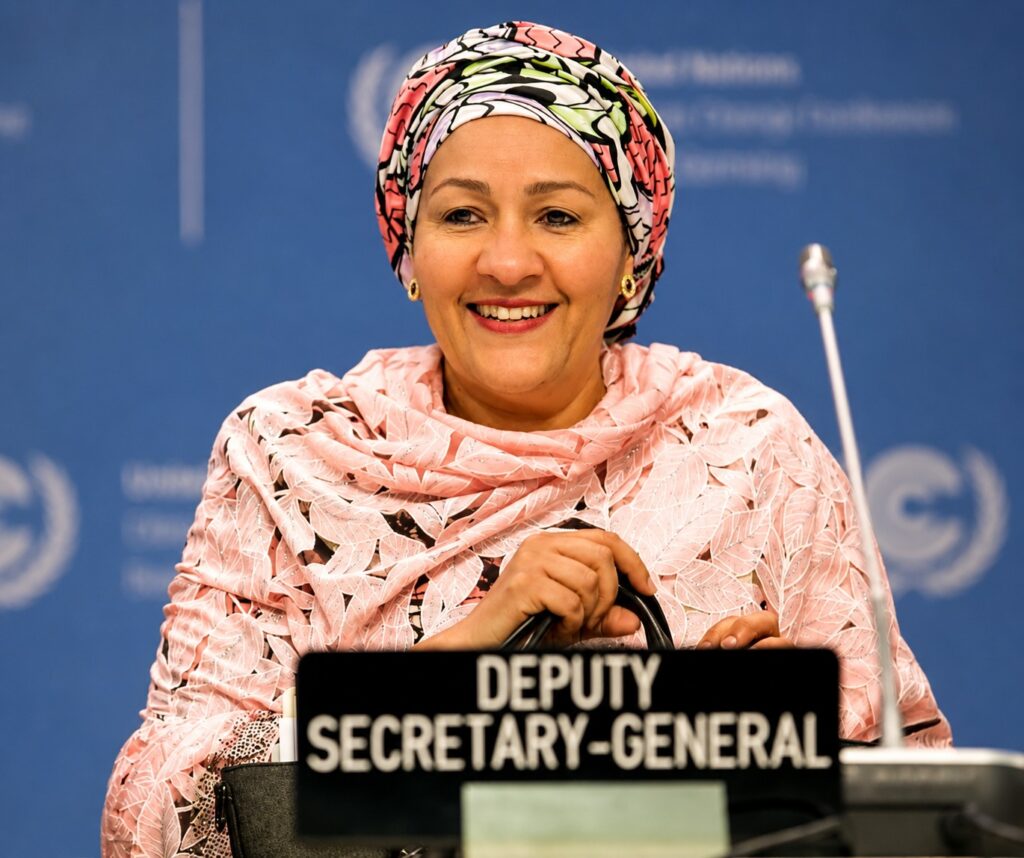
As the race to succeed António Guterres as the next Secretary-General of the United Nations gathers momentum, many Africans have naturally asked why one of the continent’s most accomplished diplomats, Nigeria’s Amina J. Mohammed, did not emerge as an official candidate. The question is both fair and important.
It was recently echoed in Nigerian media, where commentators argued that the country possessed in Amina Mohammed an exceptionally qualified public servant whose credentials would have made her a formidable contender for the world’s highest diplomatic office. The argument is understandable. Few living Africans have accumulated a résumé as distinguished as hers.
Yet, while the question is legitimate, the answer lies not in a lack of confidence from Nigeria, nor in a failure of political will. Rather, it rests on the personal decision of Amina Mohammed herself and on the realities of United Nations diplomacy.
An Exceptional International Career
There is little debate about Amina Mohammed’s qualifications.
From her role in shaping the 2030 Sustainable Development Goals to her service as Nigeria’s Minister of Environment, and ultimately as United Nations Deputy Secretary-General since 2017, she has become one of Africa’s most respected voices in global governance. She has coordinated the UN development system, represented the Secretary-General around the world, and championed climate action, sustainable development, humanitarian assistance, women’s empowerment, and international cooperation.
Very few individuals understand the United Nations better than someone who has spent nearly a decade serving as its second-highest official. For Nigeria, she remains a source of immense national pride. For Africa, she is proof that African leadership can shape global institutions at the highest level.
Why Didn’t Nigeria Present Her?
The answer is surprisingly straightforward. Unlike elections for many national offices, a country cannot simply nominate someone for the UN Secretary-Generalship without that person’s consent and active participation. A candidate must personally agree to run. They must submit to the demanding public selection process established by the UN General Assembly, engage in global diplomatic campaigning, seek endorsements from governments across continents and, most importantly, accept the intense geopolitical scrutiny that accompanies the office. By all available indications, Amina Mohammed chose not to become a candidate. Her decision appears to have been deliberate rather than imposed. There has been no indication that Nigeria attempted to nominate her against her wishes or that she sought the nomination and was denied.
In international diplomacy, declining to run is neither unusual nor controversial. Many highly respected global figures decide that the political demands of such campaigns outweigh the personal or professional benefits.
The Delicate Position of a Sitting Deputy Secretary-General
There is another important consideration.
As the serving Deputy Secretary-General, Amina Mohammed occupies one of the most senior positions in the UN Secretariat. That office is expected to maintain political neutrality while serving all member states.
Launching a campaign for the Secretary-Generalship while still holding that position would inevitably raise difficult questions about impartiality, institutional continuity and the use of official visibility during an election process.
Although UN officials are not legally barred from seeking the top office, the decision carries significant institutional and diplomatic implications.
Choosing not to run may therefore have reflected respect for the office she currently holds as much as any personal preference.
Nigeria Could Not Nominate an Unwilling Candidate
Some commentary has suggested that Nigeria should simply have announced her candidacy regardless. Diplomatically, that would have been unrealistic. No responsible government formally presents an international candidate who has not agreed to serve. Such a move would almost certainly have failed immediately and could have embarrassed both the country and the individual concerned. Successful candidacies for international organizations require months, sometimes years, of careful coordination between the candidate and the sponsoring government. Without the candidate’s active participation, there is effectively no campaign.
The Opportunity Created by Her Decision
Ironically, Amina Mohammed’s decision not to run created space for another African candidate to emerge.
That candidate is former Senegalese President Macky Sall.
Since entering the race, Sall has embarked on an extensive diplomatic campaign across Africa and beyond, meeting heads of state and seeking support for what he describes as an African vision of multilateral leadership. Reuters reports that his campaign has included consultations with African leaders as he seeks backing for the position before the selection process concludes.
Whether one agrees with his candidacy or not, the reality is that Africa’s representation in the race changed once Amina Mohammed chose not to participate.
The discussion therefore shifted from asking whether Nigeria should have presented its distinguished diplomat to considering which African candidate could realistically compete in an increasingly crowded international contest.
Africa’s Continuing Leadership
This should not be interpreted as a story of missed opportunity.
Instead, it illustrates the remarkable depth of African leadership within international institutions.
The continent has produced several figures whose credentials command global respect, including Amina Mohammed, Ngozi Okonjo-Iweala, Moussa Faki Mahamat, Rafael Grossi’s African counterparts in multilateral diplomacy, and now Macky Sall’s campaign for the UN’s highest office.
That diversity of talent is itself a testament to Africa’s growing influence in global governance.
The Right Answer
The question posed by Nigerian commentators remains valuable because it invites reflection on how African countries identify and support world-class leaders.
But the answer is ultimately simpler than many assume. Nigeria did not formally nominate Amina J. Mohammed because there was no indication that she wished to become a candidate.
International diplomacy depends not only on national endorsement but also on the willingness of the individual to undertake one of the world’s most demanding political campaigns.
Her decision deserves respect. Rather than representing a failure by Nigeria, it reflects the autonomy of an accomplished international civil servant who chose to continue serving the United Nations in her existing capacity instead of seeking its highest office.
History may remember Amina Mohammed not as the candidate Nigeria failed to nominate but as one of the most influential Deputy Secretaries-General in the modern history of the United Nations—a leader whose contributions have already helped shape global development for generations.
About Post Author