Commemorating 250 Years of the Fuuta-Tooro Revolution: A Legacy Reclaimed
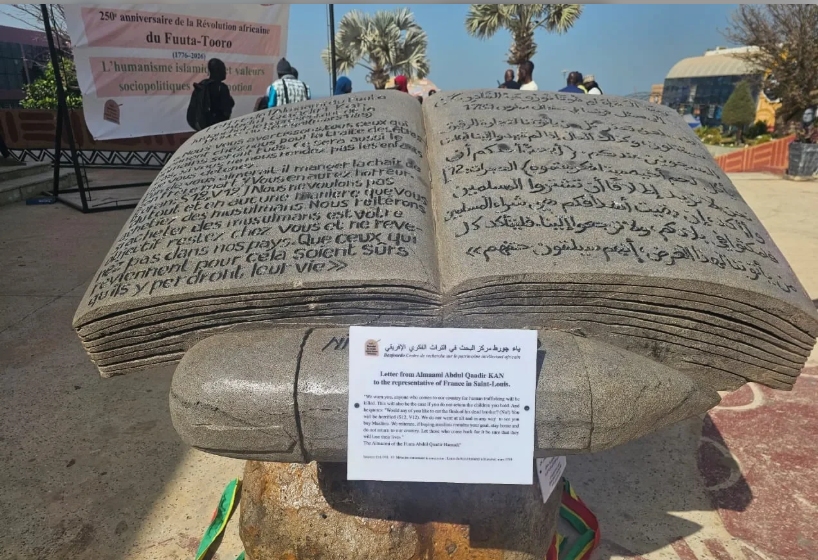
On February 24, 2026, in Dakar, the Memorial Committee of the Fouta-Toro Revolution (Comref) officially launched a series of events marking the 250th anniversary of the historic Fouta-Toro Revolution (1776–2026). The opening ceremony took place at the iconic Place du Souvenir Africain and was highlighted by the unveiling of two symbolic monuments honoring the legacy of the Almamyate leadership.
Organized in collaboration with the Baajoordo Research Center, the event served not only as a commemoration but also as a moment of reflection on the profound message carried by the revolutionaries of Fouta-Toro in 1776.
A Revolution Rooted in Enlightenment
Speaking at the ceremony, Mamadou Youry Sall, Director of the Baajoordo Research Center, drew a compelling parallel between global intellectual history and the African experience. He emphasized that while Europe was entering the Age of Enlightenment, Fouta-Toro was simultaneously experiencing its own intellectual and political awakening.
According to Sall, the establishment of the Almamyate marked the emergence of a structured and forward-thinking society. This system of governance, he explained, was grounded in principles that resonate strongly with modern democratic ideals.
A Model State Built on Ethics and Legitimacy
The Almamyate, as described during the ceremony, was far from a traditional monarchy. Instead, it embodied a proto-modern state built on rule of law, ethical governance, and public trust.
Leadership was neither inherited nor seized through force or wealth. Rather, authority was granted based on the confidence of the people. Human dignity, moral responsibility, and accountability formed the foundation of this political system—principles that remain relevant in contemporary governance discussions.
Honoring a Revolution Long Overlooked
Sall noted that this anniversary represents an opportunity to give long-overdue recognition to a revolution that has rarely received the attention it deserves in mainstream historical narratives.
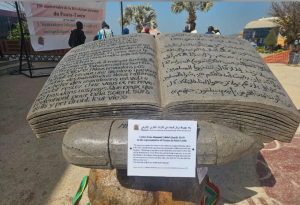
To symbolize this legacy, two striking basalt monuments were unveiled at the Place du Souvenir:
- An open-book sculpture, representing a historic letter from Almamy Abdoul Khadre Kane addressed to the French authorities in Saint-Louis, in which he firmly opposed slavery in the region.
- A traditional “alluwal” (Qur’anic tablet), inscribed with the teachings of Thierno Souleymane Baal, outlining the ethical foundations of legitimate governance.
Together, these monuments serve as powerful reminders of a political vision rooted in justice, knowledge, and moral authority.
A Call for Greater Recognition
Presiding over the ceremony, Amadou Tidiane Wone, Minister-Adviser to the President of the Republic, reaffirmed the importance of preserving and promoting this historical heritage. He highlighted the enduring influence of key figures such as Thierno Souleymane Baal in shaping this transformative period.
Wone also pointed out a striking historical fact: the Fouta-Toro Revolution predates the French Revolution of 1789. For this reason alone, he argued, it deserves far greater recognition and inclusion in educational curricula and global historical discourse.
Reclaiming an African Historical Narrative
As the commemorative activities unfold throughout the year, the 250th anniversary of the Fouta-Toro Revolution stands as a powerful reminder of Africa’s rich intellectual and political heritage. It challenges dominant narratives and invites a broader appreciation of the continent’s contributions to ideas of governance, justice, and human dignity.
This milestone is not merely a look into the past, but a call to rediscover and celebrate a legacy that continues to inspire the present and shape the future.
Source: lesoleil.sn
About Post Author