Abdoul Kader Kane: The Statesman Who Built the Almamyate
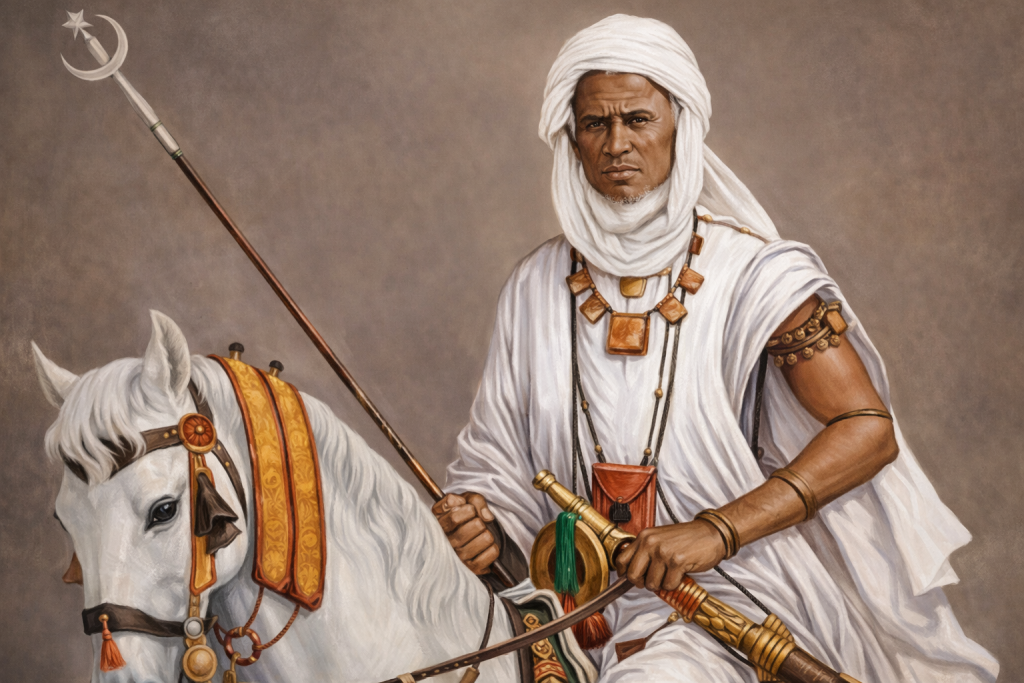
If Thierno Souleymane Baal was the visionary who ignited the moral and political transformation of Fouta-Toro, then Abdoul Kader Kane (Almami Abdul Qadir) was the statesman who transformed that vision into a functioning reality. Where Baal articulated principles, Kane institutionalized them. Where the revolution disrupted an old order, Kane built a new one, structured, principled, and enduring.
Yet to fully understand Kane’s achievement, one must look beyond the moment of revolution itself and trace the deeper intellectual currents that shaped it. For the Almamyate was not born in isolation; it emerged from a rich tradition of learning, reflection, and reform, one in which the school of Pir Saniokhore played a central role.
The Intellectual Roots: Pir and the Formation of a Reformist Elite
Long before the events of 1776, the foundations of the revolution were being laid in centers of Islamic scholarship across the region. Among them, the school of Pir Saniokhore, located in the Cayor near present-day Tivaouane, stood as one of the most influential.
The Pir University was not merely a place of religious instruction, but it was also an intellectual crucible. Here, scholars engaged deeply with Islamic law, ethics, and governance. It was within this environment that many of the Toroodo elites, who would later lead the revolution in Fouta Toro, were trained.
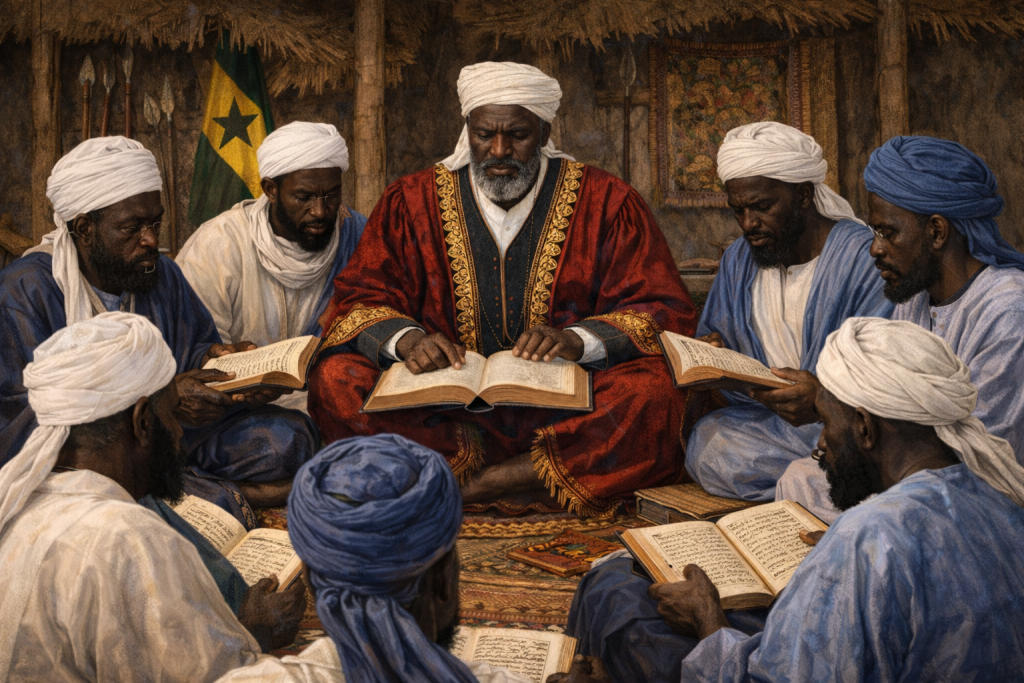
The ideas cultivated at Pir would later find political expression in the Almamyate: the rejection of hereditary privilege, the insistence on ethical leadership, and the belief that authority must be grounded in knowledge and moral responsibility.
Abdoul Kader Kane himself emerged from this broader intellectual tradition, embodying its values in both thought and action.
From Revolutionary Ally to First Almamy
Abdoul Kader Kane was not a passive beneficiary of the revolution—he was one of its central actors. Alongside Thierno Souleymane Baal, he participated in the movement that overthrew the Denianke dynasty in 1776, ending more than two centuries of hereditary rule.
Following Baal’s death that same year, Kane was chosen by his fellow Torobbe scholars and leaders as the first Almamy of Fouta-Toro—a title that signified not kingship but entrusted leadership.
His accession marked a decisive transformation in political authority. Power was no longer inherited through lineage or secured by force; it was conferred by merit, integrity, and the confidence of the community.
Kane now faces a formidable task: to consolidate a fragile victory and transform revolutionary ideals into durable institutions.
Defining and Institutionalizing the Almamyate
Under Abdoul Kader Kane, the Almamyate evolved from a revolutionary concept into a functioning system of governance.
Its core principles were clear:
- Authority based on merit rather than heredity
- Governance guided by Islamic law and ethical reasoning
- Accountability of leadership to scholars and society
- Protection of justice and social welfare
Kane understood that ideals alone could not sustain a state. He worked to build institutions that would embody and enforce these principles.
He strengthened the role of the ulama (scholars) as both advisors and moral authorities, ensuring that governance remained anchored in ethical frameworks. This created a system in which power was not absolute but subject to oversight and guidance.
Justice became central to administration. Taxation, dispute resolution, and public policy were expected to reflect fairness and responsibility. In this way, Kane translated the moral vision of the revolution into a structured political order.
A Bold Stand Against the Slave Trade
Among Abdoul Kader Kane’s most remarkable and historically significant actions was his firm opposition to the slave trade.
According to modern scholarship, including the work of Dr. Oumar Dioume of IFAN (Cheikh Anta Diop University), Kane prohibited the trafficking of enslaved people within his territory more than a decade before the French Revolution of 1789. His decision was rooted in a commitment to the dignity and rights of his people.
This stance was both principled and practical. In a region deeply entangled in trans-Saharan and Atlantic slave networks, such a policy required not only moral conviction but also political courage.
Contemporary accounts reinforce this reality. The Swedish traveler Carl Bernard Wadström, writing in the late 18th century, observed that Kane: “Forbade the slave trade within his states… refused to allow captives to pass through his territory… and encouraged his people to cultivate the land and live through their own labor.” Though expressed in the language of its time, this testimony highlights a leader committed to autonomy, dignity, and economic self-sufficiency.
Kane’s actions can be placed alongside early abolitionist movements elsewhere, such as those of the Quakers in Philadelphia in 1776, yet his policies emerged independently, grounded in Islamic ethics and local political realities.
Governance, Reform, and Social Reconstruction
Abdoul Kader Kane’s leadership extended beyond prohibition and was constructive and transformative.
He sought to rebuild society along more just and sustainable lines:
- Raiding and pillaging were prohibited
- The capture and enslavement of individuals were banned
- Populations were encouraged to resettle and rebuild communities
- Agriculture, livestock, and local industry were actively promoted
Through these measures, Kane aimed not only to govern but also to restore stability and dignity to his people.
Historical observers noted that he brought “greater enlightenment to the throne than his predecessors,” reflecting both his intellectual depth and his reformist approach.
Navigating External Threats and Regional Power
Kane’s reign unfolded within a complex and often hostile geopolitical environment.
He faced pressure from multiple fronts:
- Moorish forces from Trarza
- Neighboring kingdoms involved in slave trading, such as Cayor and Walo
- The expanding influence of French colonial interests along the Senegal River
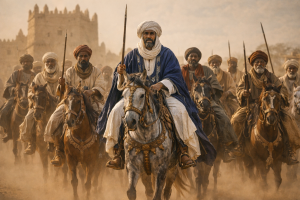
Rather than retreat, Kane engaged. He led military campaigns to defend his territory and confront systems that contradicted his principles. Among these was the Battle of Boungowi against the Damel of Cayor, as well as expeditions against Boundou and Moorish groups.
At the same time, he engaged diplomatically, particularly with French authorities in Saint-Louis, asserting his independence and refusing to compromise on fundamental ethical issues.
This balance between firmness and pragmatism defined his leadership.
Leadership as Trust, Not Privilege
At the heart of Abdoul Kader Kane’s rule was a profound redefinition of leadership.
The Almamy was not a monarch in the traditional sense. He was a custodian, bound by law, guided by ethics, and accountable to both scholars and the community. Authority was not absolute; it was conditional.
This concept of leadership stands as one of the most remarkable aspects of the Almamyate. It anticipates modern ideas of accountable governance and challenges assumptions about the development of political thought.
A Life of Struggle and Sacrifice
Abdoul Kader Kane’s life was marked by constant effort—intellectual, political, and military.
Born in Koɓɓillo Tooroɓɓe (Kobilo Torobé), in the Matam region, he rose from a background of scholarship to become a central figure in one of West Africa’s most important political transformations.
He fought to establish a new order, to defend it, and to sustain it in the face of internal and external challenges.
His life came to an end at Djoudé Gouriki, in the Kanel department, where he was killed in battle. His death marked the close of a defining chapter in the history of the Almamyate.
Legacy, Memory, and Historical Silence
Despite his profound contributions, Abdoul Kader Kane remains insufficiently recognized, even within the region he once led.
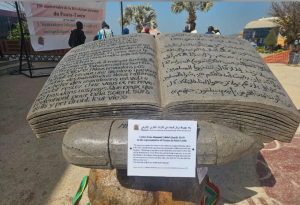
In Matam, his birthplace, there are few visible memorials to his life. His name, though present in scholarly works, is not always widely known among younger generations.
Yet his legacy endures—in ideas, in historical memory, and in the continued relevance of the principles he championed.
He was a pioneer of ethical governance, a defender of human dignity, and a builder of institutions rooted in justice.
Reframing African Political Thought
The story of Abdoul Kader Kane invites a broader reconsideration of African history.
It challenges narratives that place the origins of modern governance exclusively outside the continent. The Almamyate demonstrates that complex, principled, and forward-looking political systems were being developed within Africa—independently and innovatively.
Kane’s leadership stands as evidence of a rich intellectual tradition that deserves greater recognition in global historical discourse.
The Builder of a Moral State
If Thierno Souleymane Baal was the architect of a moral revolution, then Abdoul Kader Kane was its builder.
He took a vision and gave it structure. He transformed ideals into institutions. He demonstrated that governance could be both principled and practical, rooted in justice yet responsive to reality.
More than two centuries later, his legacy continues to resonate, offering lessons on leadership, responsibility, and the enduring pursuit of a just society.
To remember Abdoul Kader Kane is not merely to revisit the past; it is to recover a model of governance that still speaks powerfully to the present.
About Post Author