Hindou Oumarou Ibrahim: The Mbororo Fulani Woman from Chad Giving Indigenous Peoples a Global Voice
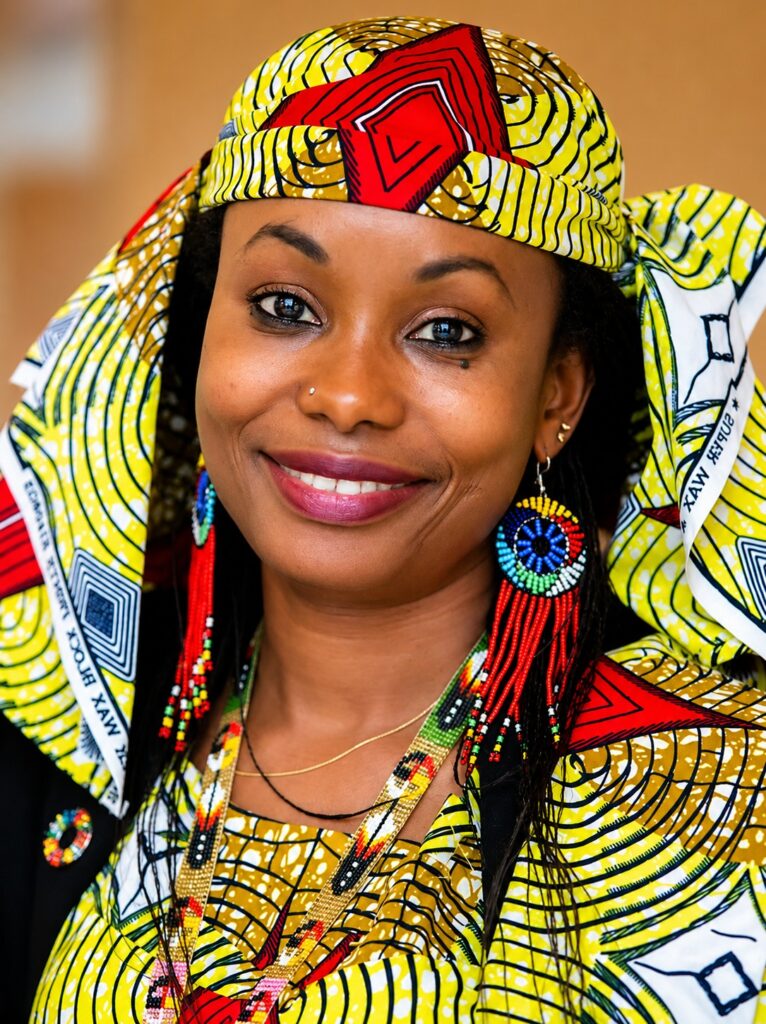
From the vast grasslands of the Sahel to the chambers of the United Nations, few Africans have become as influential in the global environmental movement as Hindou Oumarou Ibrahim. A proud Pullo (Fulani) woman of the Mbororo (Bororo) pastoralist community of Chad, she has transformed the experiences of her nomadic people into a powerful international campaign for environmental justice, indigenous rights, and climate action. Today, she is recognized as one of Africa’s leading environmental advocates, proving that the traditional knowledge of pastoral communities has an essential place in solving some of the world’s greatest environmental challenges.
A Daughter of the Mbororo Fulani
Hindou Oumarou Ibrahim was born in 1984 into the Fulbe Mbororo, one of the pastoral branches of the wider Fulani people spread across West and Central Africa. The Mbororo are traditionally semi-nomadic cattle herders whose livelihoods depend on seasonal migration in search of water and pasture.
Her childhood was divided between two worlds.
While her family settled in N’Djamena, Chad’s capital, enabling her to attend formal school, she spent her holidays living with her Mbororo relatives, herding cattle across the Sahel. This unique upbringing allowed her to experience both modern education and the rich indigenous knowledge passed down through generations of Fulani pastoralists.
Growing up, Hindou quickly realized that she enjoyed opportunities unavailable to many girls in her own community. Many Mbororo girls did not attend school, and indigenous peoples often faced discrimination, social exclusion, and limited political representation. These experiences would shape the mission of her life.
Education and Awakening
Receiving an education in Chad’s capital exposed Hindou to the inequalities faced by indigenous communities. She saw how indigenous women were frequently excluded from public life, education, and decision-making. At the same time, she recognized that her community possessed an extraordinary body of environmental knowledge that governments and scientists rarely acknowledged. Rather than abandoning her roots, she chose to bridge these two worlds. She became determined to combine formal education with indigenous wisdom, believing that both forms of knowledge could complement each other in addressing climate change and sustainable development.
Founding AFPAT
Still a teenager, Hindou began organizing indigenous women. In 1999, she helped establish the Association for Indigenous Women and Peoples of Chad (AFPAT) (Association des Femmes Peules Autochtones du Tchad). The organization later received official recognition in 2005. Its objectives include:
- defending the rights of indigenous peoples;
- promoting girls’ education;
- empowering indigenous women;
- protecting traditional pastoral lands;
- preserving indigenous knowledge; and
- promoting sustainable environmental management.
AFPAT quickly became one of Africa’s leading indigenous organizations, connecting local communities with governments, scientists, and international institutions.
Defending Indigenous Peoples’ Rights
Throughout her career, Hindou has insisted that indigenous peoples should no longer be viewed merely as vulnerable communities in need of assistance. Instead, she argues they are custodians of centuries of environmental knowledge. For pastoral Fulani communities, survival has always depended upon understanding rainfall patterns, vegetation cycles, water sources, and animal behavior. Long before satellite technology, the Mbororo relied upon careful observation of nature to predict weather and adapt to changing conditions. Hindou has worked tirelessly to ensure this knowledge receives the recognition it deserves within international environmental policy.
Environmental Protection Through Indigenous Knowledge
One of Hindou’s greatest contributions has been demonstrating how indigenous knowledge and modern science can work together. Rather than treating traditional knowledge as folklore, she promotes it as valuable scientific evidence for climate adaptation. Among her best-known initiatives is the use of participatory 2D and 3D mapping, where indigenous communities work alongside scientists to map grazing lands, migration routes, forests, rivers, and water sources.
These maps have helped:
- reduce conflicts between farmers and pastoralists;
- protect traditional grazing corridors;
- improve conservation planning;
- strengthen land rights;
- preserve biodiversity; and
- prepare communities for climate-related disasters.
Around Lake Chad—where shrinking water resources have intensified competition among farmers, fishermen, and pastoralists—her work has helped different communities identify shared solutions instead of conflict.
A Voice at the United Nations
For more than a decade, Hindou Oumarou Ibrahim has represented indigenous peoples in some of the world’s most important environmental negotiations.
She has participated extensively in discussions under the three major international environmental agreements known as the Rio Conventions:
- the Convention on Biological Diversity (CBD);
- the United Nations Framework Convention on Climate Change (UNFCCC); and
- the United Nations Convention to Combat Desertification (UNCCD).
Throughout these negotiations, she has consistently argued that indigenous peoples must not merely be consulted after decisions are made—they must be involved in shaping those decisions from the beginning.
Her advocacy emphasizes that indigenous communities protect approximately 80 percent of the world’s remaining biodiversity while occupying only a fraction of Earth’s land surface, making their participation indispensable for global conservation efforts.
Leadership Within the United Nations
Hindou has served in numerous international leadership positions.
Among them are:
- Member of the United Nations Permanent Forum on Indigenous Issues;
- United Nations Sustainable Development Goals Advocate;
- Member of the Advisory Committee to the UN Secretary-General’s 2019 Climate Action Summit;
- Member of the Indigenous Peoples of Africa Coordinating Committee (IPACC);
- Senior Indigenous Fellow at Conservation International; and
- Leadership roles within the International Indigenous Peoples Forum on Climate Change.
Through these positions, she has become one of Africa’s most respected indigenous voices within the UN system.
Building Bridges Between Science and Tradition
Perhaps Hindou’s greatest contribution is her insistence that climate science and indigenous knowledge are complementary rather than competing. She often reminds audiences that indigenous communities have observed ecosystems continuously for centuries. By combining satellite technology, meteorology, mapping, and traditional ecological knowledge, governments can develop far more effective climate adaptation strategies.
Her famous TED Talk, viewed by more than one million people, illustrates this philosophy, showing how local knowledge can strengthen scientific research rather than replace it.
Awards and International Recognition
Hindou Oumarou Ibrahim’s work has earned worldwide recognition. Among her most notable honors are:
- Pritzker Emerging Environmental Genius Award (2019);
- National Geographic Emerging Explorer (2017);
- Named among TIME Magazine’s women leading climate action;
- Included in BBC 100 Women;
- Recognition by the World Economic Forum as one of the leading global voices on climate resilience; and
- Numerous international appointments to advisory bodies on climate, biodiversity, and indigenous rights.
These awards reflect not only her personal achievements but also growing international recognition of indigenous leadership in addressing climate change.
An Inspiration for the Fulani World
For Fulani communities across Africa, Hindou Oumarou Ibrahim represents a remarkable example of what is possible when education, cultural pride, and public service come together. She has never abandoned her Mbororo identity in pursuit of international recognition. Instead, she has elevated that identity onto the global stage. Her story demonstrates that the wisdom of nomadic pastoralists—often overlooked in national politics—can help shape international environmental policy.
She has become a source of pride not only for the Mbororo of Chad but also for Fulani communities stretching from Senegal and Guinea to Nigeria, Cameroon, Niger, Mali, and beyond. Hindou Oumarou Ibrahim’s journey is one of resilience, vision, and service. From a young Fulani girl growing up between the cattle camps of the Mbororo and the classrooms of N’Djamena, she has become one of the world’s foremost advocates for indigenous peoples and environmental protection.
Her work reminds us that the future of our planet cannot be secured through technology alone. It also depends upon respecting the knowledge preserved by communities that have lived in harmony with nature for generations.
As climate change continues to reshape Africa and the wider world, voices like Hindou’s demonstrate that sustainable solutions emerge not only from laboratories and conference halls but also from the lived experiences of pastoralists, farmers, and indigenous peoples whose relationship with the land stretches back centuries.
For the Fulani people, Hindou Oumarou Ibrahim stands as a powerful symbol that cultural heritage, education, and international leadership can go hand in hand—offering hope that indigenous wisdom will remain at the heart of global efforts to protect both humanity and the environment.
Sources
- World Economic Forum – Hindou Oumarou Ibrahim Profile
- UNESCO – Faces of Living Heritage: Hindou Oumarou Ibrahim
- Conservation International – Hindou Oumarou Ibrahim Profile
- UN
About Post Author