Guinea’s Historic Recognition of National Languages: A Reform That Must Strengthen Unity, Not Division
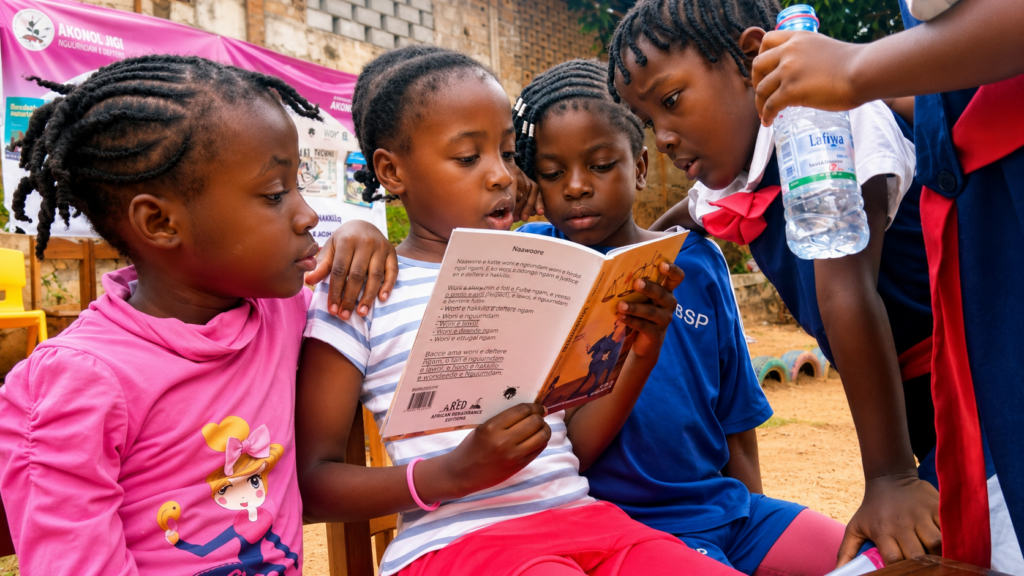
The Republic of Guinea has entered a new chapter in its history by planning to officially recognize its national languages in its Constitution. This landmark decision is far more than a constitutional amendment. It is a powerful affirmation of the country’s cultural identity, linguistic diversity, and commitment to preserving its rich heritage. For many Guineans, it marks the long-awaited recognition of indigenous languages as essential components of national life, education, public administration, and cultural development.

Yet, as Guinean journalist Tidiane Maloun Barry explains in his thoughtful and extensively researched analysis, constitutional recognition alone does not guarantee success. The true measure of this historic reform will depend on how it is implemented. If carried out with wisdom, scientific rigor, and a long-term national vision, it has the potential to strengthen national unity, improve education, preserve cultural heritage, and accelerate development. If handled carelessly or driven by political or ideological interests, it could deepen divisions, create unnecessary confusion, and undermine decades of progress achieved by African scholars and governments in the development of indigenous languages.
Language: More Than a Means of Communication
Throughout Africa, language is far more than a tool for communication. It embodies history, identity, traditions, collective memory, and ways of understanding the world. Languages preserve the knowledge of generations and serve as living expressions of culture. At the same time, language has often been intertwined with politics, identity, and national cohesion. For this reason, Barry argues that introducing Guinea’s national languages into the Constitution requires exceptional care, expert guidance, and a vision that extends far beyond immediate political interests.
The constitutional reform should become a source of national pride and unity rather than a catalyst for new divisions. The objective must be to strengthen every Guinean language equally, ensuring that no community feels marginalized or favored over another.
Guinea’s Linguistic Diversity Is a National Strength
One of the central themes of Barry’s article is that Guinea’s remarkable linguistic diversity should never be perceived as a weakness. On the contrary, it represents one of the country’s greatest national assets.
Guinea is home to numerous indigenous languages, each carrying centuries of history, literature, oral traditions, and cultural values. According to Barry, diversity itself does not create instability. Rather, instability emerges when governments fail to promote justice, equality, inclusion, and good governance.
To illustrate this point, he looks beyond Guinea’s borders. Senegal officially recognizes twenty-two national languages and has successfully introduced bilingual education in several of them. Although Wolof is widely spoken, Senegal has never adopted a monolingual national model. Its political stability rests on democratic institutions, sound governance, and respect for linguistic diversity rather than on the dominance of a single language. Rwanda, despite sharing a common language among its population, experienced one of history’s greatest tragedies, demonstrating that linguistic uniformity alone cannot guarantee peace. Conversely, multilingual Switzerland remains one of the world’s most stable democracies, proving that diversity and national unity can coexist successfully.
For Barry, the lesson is clear: national cohesion is built through justice, equality, and effective institutions—not by imposing one language at the expense of others.
Learning From History Instead of Repeating It
The author dedicates considerable attention to Guinea’s own linguistic history, arguing that the country must avoid repeating mistakes made during the early years following independence.
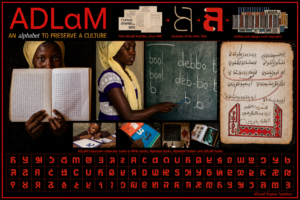
In the 1960s, UNESCO brought together African governments and leading linguists at the historic Bamako Conference to harmonize the writing systems of several major West African languages. Under the leadership of scholars such as Amadou Hampâté Bâ, experts worked to establish standardized orthographies that would facilitate literacy, education, publishing, and communication across national borders.
Barry contends that Guinea missed a historic opportunity during this process concerning Fulfulde. Political decisions prevented official participation by Guinean Fulfulde representatives, and the country subsequently adopted writing conventions that differed from those accepted by neighboring states. According to the author, this decision contributed to decades of orthographic confusion and recurring debates over how the language should be written.
Rather than reopening those debates today, Barry argues that Guinea should build upon the substantial work already completed by African linguists, governments, UNESCO, and the African Union. The country’s constitutional reform should reinforce those achievements instead of replacing them.
Protecting Africa’s Shared Languages
One of Barry’s strongest arguments concerns Africa’s transnational languages, particularly Pulaar-Fulfulde and Mandenkan. These languages are spoken by millions of people across numerous African countries and form part of a shared cultural and educational space extending well beyond national borders.
Pulaar-Fulfulde alone is spoken across West, Central, and parts of East Africa. Over the past six decades, governments, universities, literacy organizations, and international institutions have invested enormous resources in producing textbooks, dictionaries, literature, teacher-training programs, translations, and digital tools using harmonized writing systems.
Barry warns that creating separate national orthographies for these languages would isolate Guinean speakers from millions of fellow speakers across Africa. It would disconnect future generations from an extensive body of literature and educational materials while making regional cooperation more difficult. Instead of strengthening African languages, fragmentation would weaken them and diminish opportunities for continental integration.
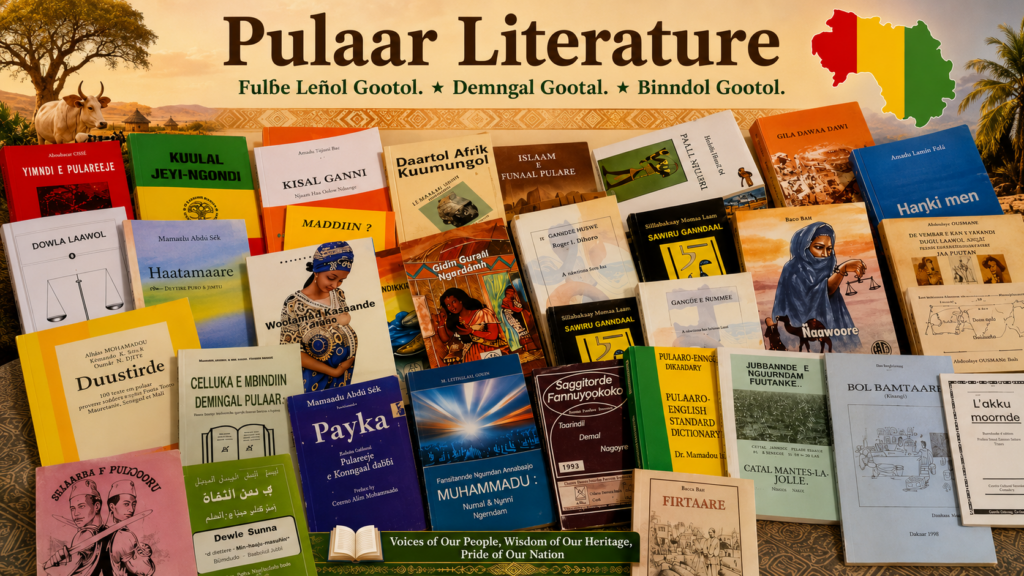
He therefore insists that Guinea should remain aligned with the harmonized orthographic standards already recognized by neighboring countries and supported by UNESCO, the African Union, and national governments throughout the region.
Making Education Easier, Not More Complicated
Education occupies a central place in Barry’s analysis. He believes language policy should simplify learning rather than make it more burdensome.
Many Guinean children already learn French through the national education system while also studying Arabic for Qur’anic education. Requiring separate writing systems for each national language would impose an unnecessary cognitive burden on students and could discourage literacy rather than promote it.
A harmonized writing system enables children to learn multiple languages more easily while giving them access to existing books, educational resources, and digital technologies. Barry argues that countries which have successfully promoted African languages have generally done so by simplifying orthographies rather than multiplying them.
He also advocates that every child in Guinea should have the opportunity to learn any of the country’s national languages, regardless of the region in which they live. A child from Fouta should be free to study Soussou or Mandenkan, just as a child from another region living in Fouta should be able to learn Pulaar without administrative, linguistic, or orthographic barriers. Such openness, he believes, would reinforce national cohesion rather than regional divisions.
The State Must Lead Language Policy
Barry strongly emphasizes that language policy is ultimately the responsibility of the State. While associations, cultural organizations, and community groups have an important role in promoting indigenous languages, only governments possess the legitimacy to establish official orthographic standards that serve the interests of the entire nation.
He extends this argument to the digital world. Companies such as Google, Microsoft, Apple, and the Unicode Consortium should respect language policies established by sovereign governments rather than allowing competing private initiatives to determine writing standards. Around the world, technology companies adapt their products to official governmental decisions regarding language. Barry believes African governments deserve the same respect for their linguistic sovereignty.
He also cautions against allowing lobbying, political influence, or private interests to override decades of linguistic research and governmental policy. The future of African languages, he argues, should never depend on pressure groups or commercial interests but on carefully considered national strategies designed to benefit future generations.
Rejecting Fanaticism and Misinformation
Another recurring concern throughout the article is the growing influence of misinformation and ideological activism in discussions about language policy.
Barry observes that social media has increasingly enabled individuals with little expertise in linguistics or history to present themselves as authorities on highly complex issues. In some cases, debates over writing systems have become entangled with religious, ethnic, or political narratives that have little connection to language itself.
He warns that such polarization threatens the healthy development of indigenous languages. Public discussion is essential, but decisions affecting millions of speakers should be guided by qualified linguists, historians, educators, and policymakers rather than emotional campaigns or ideological movements.
The author pays tribute to respected African scholars such as Amadou Hampâté Bâ and Professor Alfa Ibrahima Sow, whose lifelong work sought to simplify literacy and establish harmonized writing systems for African languages. Their vision, Barry notes, remains as relevant today as it was six decades ago.
A Historic Opportunity for Guinea and Africa
Barry concludes on a hopeful note. He believes Guinea’s constitutional recognition of its national languages presents a once-in-a-generation opportunity to strengthen national unity, preserve cultural diversity, improve education, expand literacy, encourage technological development, and deepen cooperation with neighboring African countries.
However, these goals will only be achieved if the reform is implemented with coherence, historical awareness, and scientific expertise. The reform should not be driven by political calculations, ideological competition, or emotional activism. Instead, it should build upon the work already accomplished by African governments, scholars, and international institutions while preparing future generations to thrive in an increasingly interconnected world.
Guinea’s languages are among its greatest national treasures. Protecting them requires policies that unite rather than divide, simplify rather than complicate, and preserve both national identity and Africa’s shared linguistic heritage. If Guinea succeeds in striking that balance, the constitutional recognition of its national languages may well become one of the country’s most significant cultural achievements since independence.
This article is adapted and summarized from the original French essay “Attention: l’introduction des langues nationales dans la Constitution guinéenne, une réforme historique qui exige rigueur, cohérence, vision et responsabilité” by Tidiane Maloun Barry, a Guinean journalist at RFI Fulfulde.
About Post Author