Cheikh Hamidou Kane, Senegalese Statesman and Author of L’Aventure ambiguë, Dies at 98
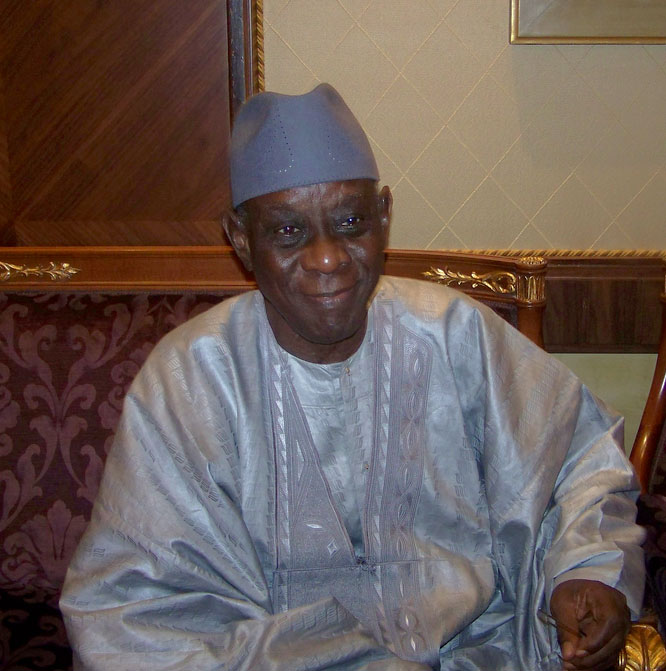
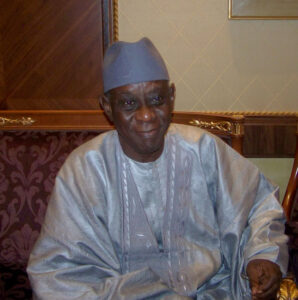
DAKAR, Senegal — Cheikh Hamidou Kane, the celebrated Senegalese novelist, philosopher and statesman whose landmark novel L’Aventure ambiguë explored the profound tensions between African tradition, Islamic education and Western modernity, has died at the age of 98.
Kane died in Dakar on Saturday, October 3, 2026. His death was announced by Senegalese authorities and followed by tributes from political leaders, writers and admirers across Senegal and beyond.
A former government minister and senior civil servant, Kane occupied a distinctive place in Senegal’s public life. But it was through literature—particularly L’Aventure ambiguë, first published in 1961—that he became one of the most recognizable voices of modern African thought.
For more than six decades, the novel has challenged generations of readers to confront a question that remained central to Kane’s intellectual life: How can Africans embrace modern knowledge and participate fully in a changing world without losing their cultural and spiritual foundations?
For the Fulani and Haalpulaar’en communities, Kane’s death also marks the passing of one of their most prominent modern intellectual figures—a writer whose work carried elements of the cultural, Islamic and philosophical traditions of the Senegal River Valley into world literature.
From Fouta to the World
Cheikh Hamidou Kane was born on April 2, 1928, in Matam, northern Senegal, into a Fulani family with deep roots in the Senegal River Valley.
His childhood brought him into contact with two educational traditions that would profoundly shape his life and writing.
He first received an Islamic education and studied the Qur’an under Thierno Moctar Gadio in Saldé. He later entered the French colonial school system, beginning a journey between two systems of knowledge that would eventually become one of the central themes of his literary work.
Kane continued his education in Senegal before pursuing higher studies in France, where he studied law and philosophy at the Sorbonne.
That movement—from Qur’anic education to the Western university—was more than a biographical detail. It placed Kane personally within one of the great intellectual debates facing his generation of Africans living through colonialism and the transition to independence.
Rather than reject one tradition in favor of another, Kane spent much of his life examining the difficult relationship between them.
L’Aventure ambiguë and the Dilemma of a Generation
Published in 1961, shortly after Senegal gained independence, L’Aventure ambiguë (Ambiguous Adventure) established Kane as a major figure in African literature.
The novel tells the story of Samba Diallo, a young man from the fictional Diallobé community who begins his education under a demanding Qur’anic teacher before entering the Western school and eventually continuing his studies in France.
Behind Samba Diallo’s personal journey lies a much larger debate about education, faith, identity and cultural survival.
The Diallobé must decide whether to send their children to the new foreign schools. They understand that Western education provides access to the knowledge and power reshaping their world. But they also fear what their children may lose in acquiring it.
Among the novel’s most memorable figures is the Grande Royale, whose pragmatic intervention captures the painful dilemma confronting the community: Africans may have to learn from those who defeated them, even without knowing what that learning will ultimately do to them.
Through Samba Diallo’s journey, Kane transformed the experience of one community into a broader meditation on colonialism and the encounter between civilizations.
The novel received the Grand Prix littéraire d’Afrique noire in 1962 and went on to become a classic of African literature, widely studied in African, European and American universities and translated into numerous languages.
More than 60 years after its publication, its central concerns remain strikingly current as African societies continue to debate language, education, globalization, religion, development and cultural identity.
A Literary World Rooted in Fulani Culture
Although L’Aventure ambiguë addresses universal philosophical questions, its cultural landscape is deeply connected to the Fulani and Haalpulaar’en world from which Kane emerged.
The Diallobé community, its Qur’anic education, social relationships, religious authority and respect for knowledge evoke aspects of the intellectual traditions historically associated with Fouta and the Senegal River Valley.
Kane never treated that heritage merely as folklore or as a cultural relic belonging to the past. He presented it as a living intellectual tradition capable of engaging some of the most difficult questions of the modern age.
This is one reason his work occupies a particularly important place within Fulani intellectual history.
Through a novel written in French, Kane brought a worldview shaped in part by Pulaar-speaking Muslim society into an international literary conversation.
His achievement was not simply to describe Fulani culture to outsiders. He used the experiences of that world to examine universal questions about knowledge, faith, power, identity and human purpose.
From Literature to Public Service
Kane’s contribution to Senegal extended well beyond literature.
Following his studies in France, he returned to Senegal and joined the public administration during the period surrounding independence. He became part of the generation charged with building and managing the institutions of the new Senegalese state.
Over the course of his public career, he held senior administrative responsibilities and served in government, including as Minister of Industrial Development and Handicrafts and later Minister of Planning and Cooperation.
His career placed him at the intersection of ideas and government.
The questions he examined through literature—modernization, social transformation, cultural continuity and the future of African societies—were also questions confronting African policymakers after independence.
Kane therefore belonged to a relatively rare category of African intellectuals who participated directly in both the philosophical debate about postcolonial Africa and the practical administration of the postcolonial state.
Returning to the Question of Africa After Independence
Kane published his second novel, Les Gardiens du Temple, in 1995, more than three decades after L’Aventure ambiguë.
If his first novel focused heavily on the cultural and spiritual consequences of colonial education, Les Gardiens du Temple turned toward another challenge: what African societies would make of independence.
The political context had changed. Colonial rule had formally ended across much of the continent, but questions surrounding governance, inherited institutions, tradition, political authority and social transformation remained.
Seen together, Kane’s two major novels trace an important arc in modern African history.
L’Aventure ambiguë asks what happens to African consciousness when it encounters the colonial school and Western modernity.
Les Gardiens du Temple turns toward the responsibilities and contradictions that emerge when Africans begin governing independent states.
Both works reflect Kane’s lifelong concern with the relationship between heritage and change.
A Continuing Commitment to Fulani Heritage
Despite his education abroad and decades at the highest levels of Senegalese public life, Kane maintained strong connections to his cultural origins.
In his later years, he remained involved in cultural, humanitarian, and development initiatives and was associated with efforts to preserve and promote Fulani heritage.
His involvement with Tabital Pulaaku, the international organization devoted to Fulani culture, identity and solidarity, reflected that continuing commitment.
For many Fulani intellectuals and cultural activists, Kane represented an important example of how cultural rootedness and openness to the wider world could coexist.
His life resisted the assumption that modern education required abandoning inherited identity.
He could write in French while remaining connected to a Pulaar cultural universe. He could study Western philosophy while maintaining a profound engagement with Islamic thought. He could serve the institutions of a modern republic while recognizing the intellectual traditions that existed in African societies long before colonial rule.
That balance was also at the heart of his literature.
His Name Given to a University
Senegal paid one of its most significant institutional tributes to Kane during his lifetime when the country’s public digital university was renamed Université numérique Cheikh Hamidou Kane in 2023.
The honor carried particular symbolism for an author whose best-known work revolved around education and the consequences of entering new systems of knowledge.
Kane’s own educational journey had begun with Qur’anic learning before passing through the colonial school and eventually the Sorbonne.
Nearly a century later, his name became attached to a university built around digital technology and new forms of access to knowledge.
The progression—from the Qur’anic school to the digital university—mirrors, in many ways, the extraordinary transformations Kane witnessed during his lifetime.
Tributes From Senegal
Senegalese leaders paid tribute to Kane following news of his death.
President Bassirou Diomaye Faye honored him as a major literary figure and a devoted servant of Senegal, highlighting the enduring importance of his work to the country’s and Africa’s intellectual heritage.
Former President Macky Sall also paid tribute to the late writer and statesman, recalling a major intellectual whose work addressed fundamental questions of identity, culture and Africa’s relationship with the wider world.
The tributes reflected the unusual breadth of Kane’s career. He belonged simultaneously to Senegalese literature, public administration, political history and the broader African intellectual tradition.
A Major Voice of Fouta Falls Silent
Cheikh Hamidou Kane lived through nearly a century of profound transformation.
Born under French colonial rule in 1928, he witnessed the colonial period, African independence, the construction of the Senegalese state, the political and economic upheavals of postcolonial Africa and the emergence of a new globalized and digital generation.
Yet many of the questions he raised in 1961 have not disappeared.
What should Africans learn from other civilizations?
What should they preserve from their own?
How can education expand human possibilities without producing cultural alienation?
Can modernization occur without cultural erasure?
And how can religious faith, inherited knowledge and modern science coexist within the same society—and within the same individual?
Kane did not reduce these questions to simple choices between Africa and the West, tradition and modernity, or religion and secular knowledge.
That complexity was precisely what made L’Aventure ambiguë enduring.
For Senegal, his death represents the loss of a former statesman and one of the country’s most internationally recognized writers.
For African literature, it marks the passing of an author whose relatively small body of published fiction exercised an influence far greater than its size.
And for the Fulani and Haalpulaar’en world, his passing carries particular significance.
Cheikh Hamidou Kane took an intellectual experience deeply connected to Fouta, Islamic scholarship and Fulani society and transformed it into literature capable of speaking far beyond the community that inspired it.
Samba Diallo’s ambiguous adventure consequently became much more than the story of one young African confronting two educational worlds.
It became the story of generations.
Cheikh Hamidou Kane is gone, but the questions he raised about knowledge, identity, faith and Africa’s place in the modern world remain.
Inna lillahi wa inna ilayhi raji’un. May Allah grant him mercy and Jannatul Firdaus.
About Post Author