Thierno Souleymane Ball: Architect of a Moral Revolution
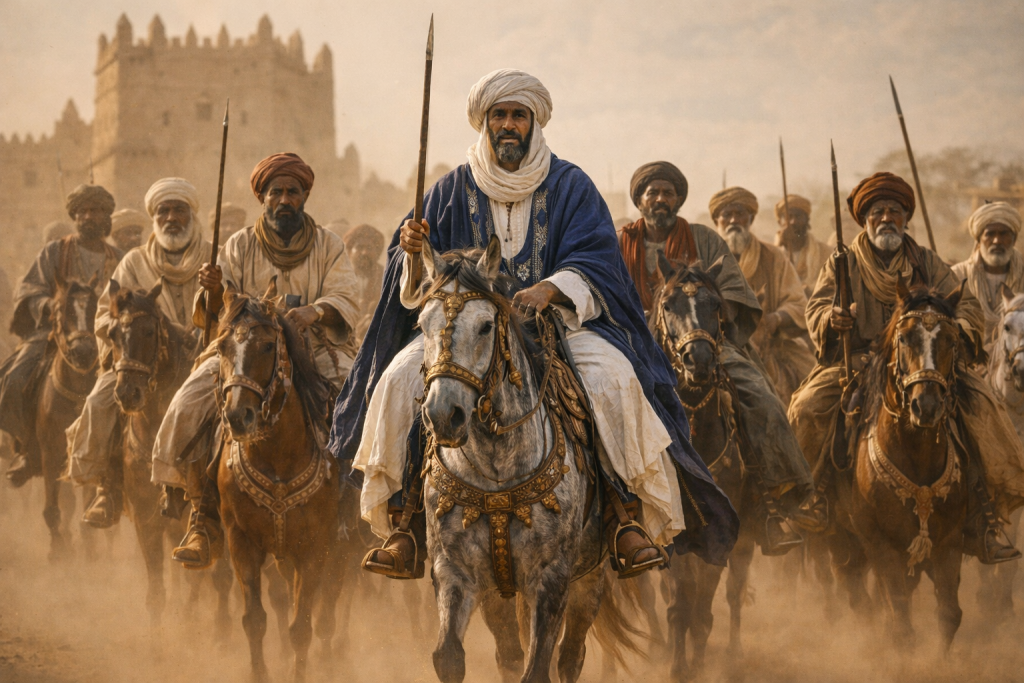
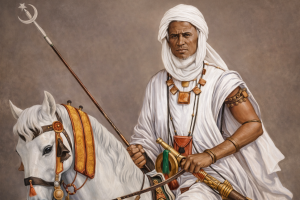
In the first installment of our series on the Fouta-Toro Revolution (1776–2026), we explored the historical significance of a movement that reshaped political thought in West Africa and offered an early model of ethical governance—one that, in many respects, anticipated later global revolutions. Yet behind this transformative moment stood a figure whose influence far exceeded the brevity of his life: Thierno Souleymane Baal.
At once a scholar, reformer, and reluctant revolutionary, Souleymane Baal did not set out to seize power. Rather, he sought to restore it—to reclaim governance from the grip of hereditary privilege and re-anchor it in justice, accountability, and moral responsibility. His life’s work was not merely political; it was profoundly ethical, rooted in a vision of society where dignity and fairness were not ideals, but lived realities.
A World in Transition: Fouta-Toro in the 18th Century
To understand the magnitude of Souleymane Baal’s contribution, one must first consider the world he inherited. In the 18th century, the Fouta-Toro region—stretching along the Senegal River—was under the control of the Denianke dynasty. Their rule, long established and deeply entrenched, was characterized by hereditary authority and a rigid social hierarchy.
Power was concentrated in elite lineages. Governance functioned less as a public trust and more as a continuation of familial dominance. Over time, this structure began to drift away from the broader interests of society. Inequality deepened, accountability weakened, and the moral legitimacy of leadership came into question.
It was within this context that a quiet but determined intellectual began to shape a different vision of power.
The Making of a Reformist Mind
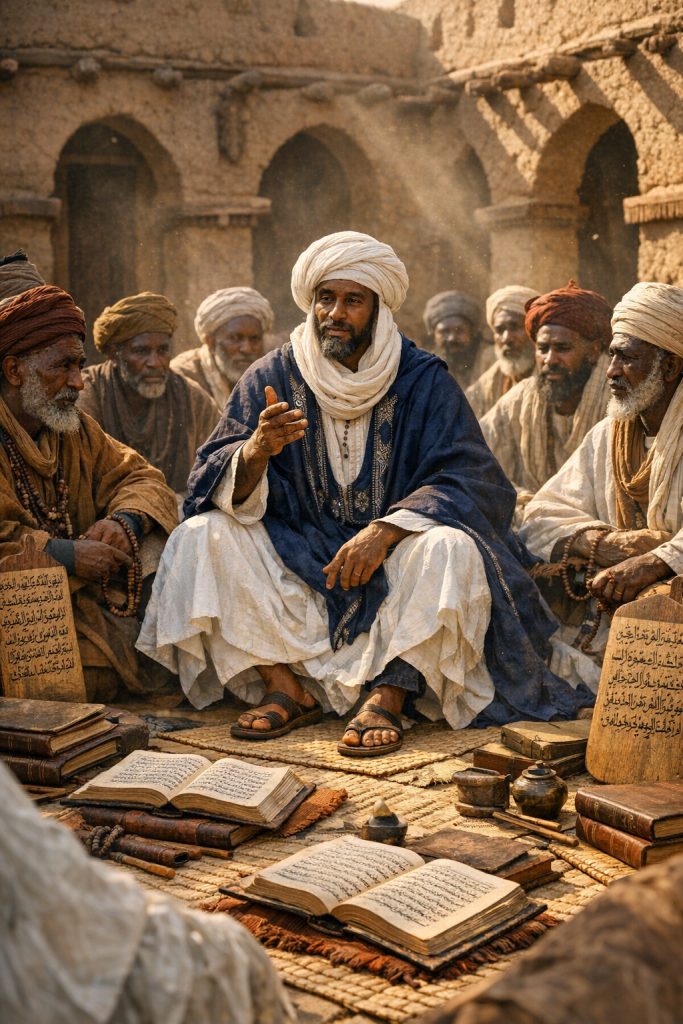
Born around 1705, Souleymane Baal was not initially destined for political leadership. He was, above all, a man of knowledge. His early life was marked by an insatiable pursuit of learning, particularly in Islamic sciences, law, and theology.
But his education did not remain confined to a single place. He traveled extensively—through Cayor, Boundou, Fouta Djallon, and Mauritania—engaging with scholars, observing political systems, and absorbing diverse interpretations of governance and law.
These journeys proved decisive. They exposed him to both the strengths and shortcomings of different societies and deepened his understanding of justice as both a legal and moral principle. Through these experiences, Souleymane Baal came to a powerful conclusion: authority should not be inherited, it should be earned.
Leadership, in his view, was not a privilege tied to bloodlines, but a responsibility entrusted to those who demonstrated integrity, competence, and a commitment to the common good.
From Observation to Action
When Souleymane Baal returned to Fouta-Toro, he encountered a political order that stood in stark contrast to the ideals he had developed. The dominance of hereditary rule, reinforced by social stratification, had created a system resistant to reform.
For a time, he remained within the realm of teaching and advising. But as conditions worsened and the gap between governance and justice widened, it became clear that intellectual critique alone would not suffice.
The moment demanded action.
In 1776, with the support of Abdoul Kader Kane—who would later become Almamy—Souleymane Baal helped lead a movement that would bring an end to the Deeniyanke dynasty. The overthrow of Suley Njaay Tokooso marked a decisive turning point, not only in leadership but in the very conception of political authority.
The Toroodo Revolution: A New Political Philosophy
The revolution of 1776, often referred to as the Tooroodo Revolution, was not simply a rebellion against a ruler, it was a redefinition of the state itself.
At its core, the movement sought to establish a system grounded in:
- Justice as a governing principle
- Moral integrity in leadership
- Meritocracy over hereditary privilege
- Protection of the vulnerable
Souleymane Baal’s contribution to this transformation was both conceptual and symbolic. In a gesture that captured the spirit of the revolution, he abandoned his surname “Ba” and adopted “Baal.” This seemingly small act signaled a profound rupture with the past—a rejection of inherited identity in favor of chosen principles.
It was, in essence, the birth of a new political and moral order.
Reimagining Power: From Satigi to Almamy
One of the most radical aspects of Souleymane Baal’s vision was his redefinition of leadership itself.
Under the old system, rulers were known as Satigi—kings whose authority derived from lineage and tradition. The revolution replaced this model with the concept of the Almamy, a leader selected not by birthright, but by merit.
The Almamy was expected to embody:
- Moral uprightness
- Intellectual competence
- A commitment to justice
- Accountability to the people
This shift represented more than a change in title; it marked the emergence of a new political philosophy. Authority was no longer an inherited possession—it was a conditional trust.
In this sense, the Almamyate can be seen as an early experiment in constitutional thinking, where legitimacy was tied not to lineage, but to ethical conduct and public confidence.
A Charter of Ethical Governance
Souleymane Baal articulated his ideas with remarkable clarity. Before the notables of Fouta-Toro, he laid out a framework for governance that remains strikingly relevant even today.
He argued that:
- Power must never be hereditary, as inheritance undermines accountability
- Illegitimate wealth should be scrutinized, reflecting a concern for economic justice
- Taxation must serve the public good, not private enrichment
- The Senegal River should unite communities, rather than serve as a boundary of division
- Society must prioritize its most vulnerable members, including orphans, the elderly, and children
This was not merely a set of ideals—it was a blueprint for a just society.
What is particularly remarkable is how these principles anticipate modern discussions around governance, social welfare, and ethical leadership. In many ways, Souleymane Baal was articulating a vision of the state that would only gain global prominence centuries later.
Resistance and Sovereignty: The Refusal of Tribute
Among the defining episodes of Souleymane Baal’s life is his confrontation with external authority.
For generations, certain groups had come to collect tribute from the regional practice accepted as customary. But Souleymane Baal saw it differently. To him, such impositions lacked both moral and spiritual legitimacy.
When confronted by those seeking to enforce this tribute, he responded with calm firmness. He rejected their authority outright and declared that such taxes would no longer be tolerated.
This act of defiance was not merely political, it was symbolic. It asserted the sovereignty of Fouta-Toro and the principle that authority must be grounded in justice.
From this moment, he became known as the “Breaker of the Mouudo Horma”—a title that captured both his courage and his commitment to dignity.
A Life Cut Short, Legacy That Endures
Despite his profound influence, Souleymane Baal’s life was tragically brief. In 1776—the very year of the revolution he helped lead—he died in battle against Mauritanian forces.
His death marked the end of a remarkable journey, but not the end of his ideas.
The state he helped establish would, in time, face internal divisions and challenges that weakened its cohesion. Yet the principles he articulated did not disappear. They endured—in memory, in discourse, and in the continuing aspiration for just governance.
A Forgotten Pioneer of Political Thought
Today, when global history recalls the great revolutions of the modern era, the Fouta-Toro Revolution is rarely mentioned. Yet it preceded the French Revolution of 1789 and embodied many of the same ideals—justice, equality, and the redefinition of political legitimacy.
Souleymane Baal stands, therefore, as a forgotten pioneer of political thought—a thinker and actor whose contributions challenge the boundaries of conventional historical narratives.
His vision reminds us that the pursuit of justice and ethical governance is not the monopoly of any one region or tradition. It is a universal aspiration, expressed in diverse forms across time and space.
Relevance in the Modern World
In an era marked by debates over governance, corruption, inequality, and leadership accountability, Souleymane Baal’s ideas resonate with renewed urgency.
His insistence that power must be earned—not inherited—speaks directly to contemporary concerns about legitimacy. His emphasis on protecting the vulnerable aligns with modern notions of social justice. His call for ethical leadership remains as relevant today as it was in the 18th century.
He was not merely a figure of his time—he was a voice for all times.
The Enduring Light of a Moral Vision
Thierno Souleymane Baal was, above all, a man guided by conviction. He did not seek power for its own sake, nor did he pursue recognition. His legacy is not built on monuments or titles, but on ideas—ideas that continue to illuminate discussions of justice, governance, and human dignity.
As we reflect on the 250th anniversary of the Fouta-Toro Revolution, his life invites us to reconsider what leadership truly means. It challenges us to imagine a world where power is not a privilege, but a responsibility—where authority is not inherited but earned.
In remembering Souleymane Baal, we are not merely honoring the past. We are engaging with a vision that still speaks to the present—and perhaps, more importantly, to the future.
About Post Author