Aishatu Dahiru Ahmed “Binani”: The Fulani Woman Who Redefined Leadership, Business, and Courage in Northern Nigeria
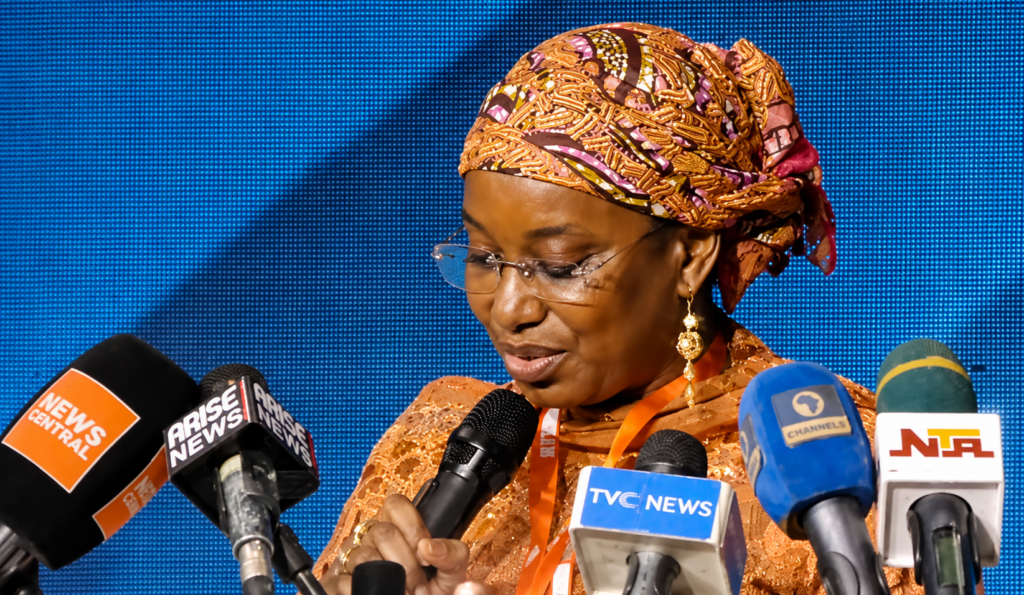
In the modern political history of Northern Nigeria, few women have challenged convention and broken as many barriers as Aishatu Dahiru Ahmed, widely known as Binani. A politician, entrepreneur, philanthropist, and one of the most influential Fulani women of her generation, Binani has become a symbol of determination, resilience, and visionary leadership.
Her journey, from humble beginnings in Northern Nigeria to becoming a senator, a governorship candidate, and a successful businesswoman, demonstrates that courage, education, and perseverance can overcome even the most deeply rooted cultural and political obstacles.
A Daughter of the Fulani Heritage
Aishatu Dahiru Ahmed was born on 11 August 1971 in Kaduna, Nigeria, into a respected Fulani family with deep historical roots in Adamawa. Her father, Dahiru Ahmed Chiroma, descended from a distinguished lineage connected to Ahmadu Malabu and the family of Nigeria’s first defense minister, Muhammadu Ribadu.
Although born in Kaduna, her upbringing remained closely tied to Adamawa State, one of Nigeria’s historic Fulani heartlands. Growing up within the rich traditions of the Fulɓe (Fulani) people, she learned values that would later define her public life: discipline, integrity, generosity, and perseverance.
These qualities have long been admired among Fulani communities throughout West Africa, where scholarship, leadership, and service to society occupy an honored place.
Education: Building a Strong Foundation
Unlike many girls of her generation in Northern Nigeria, Binani pursued education with remarkable determination. She completed her primary education in Kaduna and Gwadabawa Primary School in Jimeta before attending Government Secondary School in Yola. Her passion for science led her to the Federal Polytechnic, Mubi, where she earned both the Ordinary National Diploma (OND) and the Higher National Diploma (HND) in Electrical and Electronics Engineering.
During her National Youth Service Corps (NYSC) service in Borno State, she received the State Merit Award for outstanding performance. Her academic journey did not stop there. She later studied rural radio systems at the University of Southampton in the United Kingdom, earned a postgraduate diploma in business management, and completed further studies in data processing. Her educational path reflects a lifelong commitment to learning quality that would prove invaluable in both business and politics.
Entrepreneurial Vision: Building Success Beyond Politics
Before entering public office, Binani had already established herself as a successful entrepreneur.
She is widely recognized as the founder of Binani Air, an aviation enterprise created with the vision of improving regional connectivity and expanding opportunities within Nigeria’s growing aviation sector. Her success in business distinguished her from many politicians who entered public life without significant private-sector experience.
Her entrepreneurial achievements strengthened her reputation as someone capable of creating jobs, managing complex organizations, and understanding economic development from firsthand experience.
Rather than relying solely on politics for influence, Binani demonstrated that economic empowerment and entrepreneurship can serve as powerful tools for national development.
Her business background also shaped her political philosophy, emphasizing investment, infrastructure, employment, and sustainable growth.
Entering Politics Against the Odds
In 2011, Binani made a bold decision that surprised many observers: she entered partisan politics.
Northern Nigeria has traditionally been one of the country’s most conservative political environments, where leadership has largely remained the domain of men.
Many believed her quiet personality and modest demeanor would prevent her from succeeding. They underestimated her.
She won an election to Nigeria’s House of Representatives, representing the Yola North, Yola South, and Girei Federal Constituencies, becoming one of the few prominent female legislators from Northern Nigeria. During her tenure, she served on several important committees, including Appropriations, Land Transport, Millennium Development Goals, Petroleum Resources (Downstream), and Constituency Outreach. Her work focused on improving healthcare, education, infrastructure, agricultural support, and employment opportunities. One of her most memorable initiatives was distributing approximately 75,000 school bags to children in her constituency, reflecting her commitment to education and youth development.
Learning from Defeat
Political success rarely comes without setbacks. After serving in the House of Representatives, Binani contested for a Senate seat but was defeated. For many politicians, such a loss would have ended their ambitions. Instead, she treated defeat as a lesson rather than a destination. She reorganized, strengthened her political network, changed strategy, and returned stronger. Her resilience became one of her defining characteristics.
Historic Victory in the Senate
The 2019 elections marked a turning point.
Running under the platform of the All Progressives Congress (APC), Binani won an election as senator representing Adamawa Central. Her victory carried historic significance.
She became the only female senator from Northern Nigeria in the Ninth National Assembly, an achievement that resonated across the region and inspired countless young women. As Chairperson of the Senate Committee on Sustainable Development Goals (SDGs), she worked on policies related to poverty reduction, education, healthcare, gender equality, and national development. Her engineering background, business experience, and legislative work gave her a practical approach to governance.
A Courageous Bid for Governor
Perhaps the greatest demonstration of Binani’s courage came during the 2023 governorship election in Adamawa State. She entered a fiercely contested primary that included some of Northern Nigeria’s most powerful political figures and won. Her emergence as the APC candidate represented a watershed moment. Few women in Northern Nigeria had ever come so close to leading a state.
Although the election became one of the most controversial in recent Nigerian history, with legal disputes and the eventual affirmation of the incumbent governor by the courts, Binani’s campaign fundamentally changed perceptions about women’s political leadership in Northern Nigeria.
Regardless of the final outcome, she proved that women could compete—and compete successfully—at the highest levels of Nigerian politics.
Philanthropy and Grassroots Leadership
Throughout her career, Binani has maintained a reputation for generosity and community service. Her philanthropic work includes:
- Scholarships for disadvantaged students
- Borehole construction to improve access to clean water
- Payment of medical bills for vulnerable families
- Economic empowerment programs
- Educational support initiatives
- Assistance to communities regardless of ethnic or religious background
Observers frequently note that many of those who supported her political campaigns came from diverse ethnic and religious communities, reflecting her inclusive approach to leadership.
Recognition and Traditional Honor
In recognition of her service to Adamawa State and her people, the Adamawa Emirate Council conferred upon her the prestigious traditional title of Gimbiyar Adamawa (“Princess of Adamawa”) in 2020.
The title symbolizes both respect and confidence in her contributions to public service and community development.
An Inspiration for Fulani Women and Africa
Across Fulani communities stretching from Senegal and Guinea to Mali, Niger, Nigeria, Cameroon, and beyond, Binani’s story carries profound significance. She demonstrates that Fulani women can excel simultaneously in education, business, politics, and public service while remaining deeply connected to their cultural heritage. Her career challenges outdated assumptions about women’s leadership and offers a powerful example for younger generations. She embodies the idea that leadership is earned through competence, preparation, integrity, and persistence, not simply inherited or granted.
Aishatu Dahiru Ahmed “Binani” stands among the most influential Fulani women of contemporary Africa. Engineer, entrepreneur, legislator, philanthropist, senator, and political trailblazer, she has repeatedly broken barriers in environments where few believed such achievements were possible. Her life is ultimately a story of resilience: of a young Fulani woman who invested in education, succeeded in business, entered politics with courage, overcame setbacks, and inspired millions by refusing to accept the limits imposed by convention.
Whether remembered for her entrepreneurial achievements, her legislative accomplishments, or her historic political campaigns, Binani has already secured her place among the remarkable women shaping the future of Northern Nigeria and the wider Fulani world.
About Post Author