Hakke Rewbe (Women’s Rights): A Thoughtful Portrait of Fulbe Women Between Tradition and Change
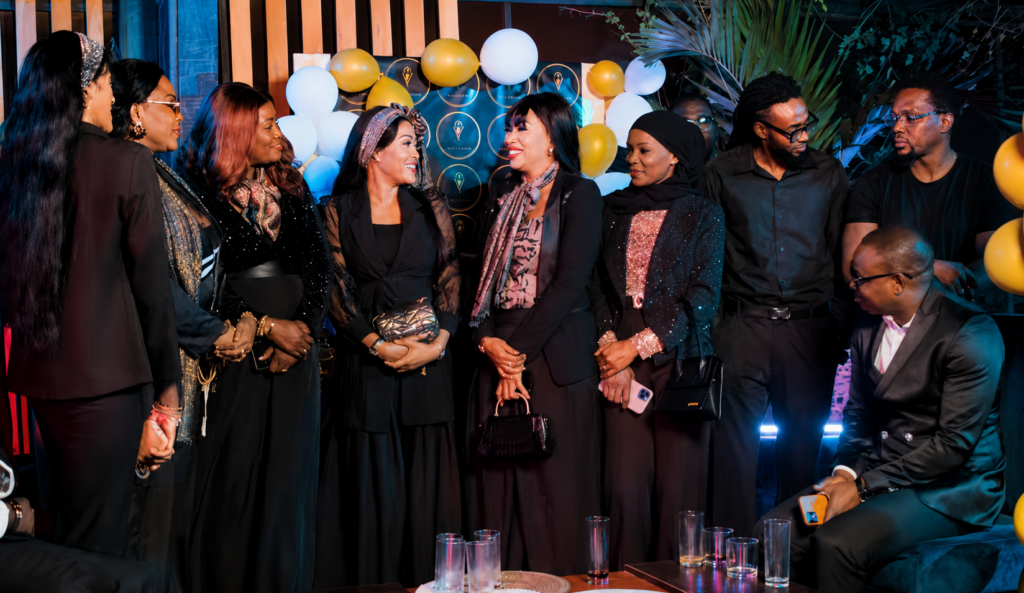
Hakke Rewbe (“Women’s Rights” in Pulaar/Fulfulde), produced by Marodi Pulaar TV, is far more than a family drama. It is a thoughtful social commentary on marriage, gender relations, and the challenges faced by women in the traditionally conservative Fulbe Muslim society of Senegal and beyond. Rather than attacking Fulbe culture or Islam, the series explores the difficult intersection between faith, tradition, and customs that often place enormous burdens on women.
The series centers on the Fulbe belief that an honorable Fulbe woman should embody munyal—patience, endurance, and dignity. While these virtues are deeply respected within Fulbe culture, Hakke Rewbe asks an important question: when does patience become silent acceptance of injustice?
The story follows four memorable women whose lives represent different aspects of this struggle.
Mignelle: Refusing Silence
Mignelle, divorced for the second time, returns to her parents’ home only to be rejected by her deeply conservative father. To him, repeated divorce disgraces the family and violates both Fulbe tradition and Islamic values. Refusing even to hear her explanation, he orders her to leave unless she returns to her husband.
Her mother and siblings sympathize with her, but family authority belongs to the father. Supported by his daughter-in-law Sawdatou, he believes accepting Mignelle would undermine his honor and encourage other women to challenge long-established social norms.
Instead of surrendering, Mignelle finds refuge with her cousin Diariatou. Intelligent and outspoken, she uses social media to discuss domestic abuse and women’s struggles. Her online broadcasts resonate with many young women, making her an unexpected voice for those whose experiences have long remained unspoken.
Hanni: Faith Without Submission to Abuse
Hanni presents perhaps the most compelling character in the series. A modest, hijab-wearing Muslim woman, she devotes herself to caring for her chronically ill husband Ibrahim. Their marriage is built on genuine affection, trust, and loyalty.
Yet Hanni’s greatest challenge comes not from her husband but from her mother-in-law, who blames her for every misfortune in the household, accusing her of bringing bad luck and failing to bear children. Despite constant humiliation, Hanni responds with remarkable patience and dignity.
Importantly, the series does not portray Hanni’s religious commitment as weakness. On the contrary, her faith becomes the source of her strength. She quietly supports struggling women financially while writing about the injustices they face. Through Hanni, the series argues that a woman can remain deeply committed to Islam while advocating for justice and human dignity.
Diariatou: A Safe Haven
Diariatou’s story reflects another reality common across West Africa. Her husband migrated to Europe years earlier before the birth of their daughter and disappeared completely. With no news of him for over a decade, the family assumes he has died, leaving her effectively a single mother.
Her apartment becomes both a refuge for Mignelle and eventually a sanctuary for women escaping abuse. Practical, compassionate, and courageous, Diariatou provides the physical space from which the movement later known as Debbo Power begins.
Fatima: The Cost of Migration
Fatima’s story is perhaps the most emotionally powerful in the series.
Her husband Moussa migrated to Europe, hoping, as countless young Fulbe men do, to build a better future for his family. Like many migrants, Moussa’s dreams change abroad. He marries a second wife, Binta, a financially independent French-born Fulani woman whose wealth gradually gives her significant influence over him.
When Moussa returns home with Binta, Fatima accepts polygamy with dignity, expecting only that her husband fulfills Islam’s requirement of justice between wives. Instead, she is ordered to surrender her bedroom and sleep on the living-room couch to accommodate the new wife.
This humiliation marks the beginning of escalating emotional, verbal, and physical abuse. Financial dependence prevents Moussa from treating both wives fairly, while Binta exploits her position to dominate and mistreat Fatima.
The series carefully distinguishes between the Islamic principle of justice in polygamy and the human failure to practice it.
The Birth of Debbo Power
Out of the shared experiences of Hanni, Mignelle, and Diariatou emerges Debbo Power (“Women’s Power”), an organization dedicated to helping women trapped by abuse, injustice, and silence.
Joined later by Fatima and other survivors, the group provides legal assistance, financial support, emotional counseling, and practical protection for victims. Their work extends beyond domestic violence to cases involving sexual harassment, rape, and other forms of exploitation.
Interestingly, the organization avoids labeling itself “feminist,” a term often viewed with suspicion in its social environment. Instead, it presents itself simply as women helping women—a choice that allows its message to resonate more broadly within its cultural setting.
Beyond Simple Villains
One of the strengths of Hakke Rewbe is its refusal to reduce every conflict to “men versus women.”

While many of the abusers are men, several women also become perpetrators of injustice. Binta initially uses her wealth and influence to manipulate Moussa into abusing Fatima. Likewise, Sawdatou, Mignelle’s sister-in-law, encourages the father’s harsh treatment of his daughter while creating conflict within her own household through deception and selfish behavior.
Eventually, Binta herself becomes another victim of Moussa’s abuse, reminding viewers that injustice often consumes those who once believed they controlled it.
This moral complexity gives the series credibility and prevents it from becoming simplistic social propaganda.
Faith, Culture, and Reform
Perhaps the greatest achievement of Hakke Rewbe lies in its nuanced distinction between Islam and local customs.
The series never argues that Islam oppresses women. Instead, it repeatedly suggests that many practices restricting women stem from cultural traditions rather than authentic Islamic teachings. Through Hanni especially, viewers see that a practicing Muslim woman can seek education, dignity, justice, and respect while remaining faithful to her religion.
Mignelle expresses this beautifully when defending herself before her father. She insists she remains proud of both her Islamic faith and her Fulbe identity. The disagreement, she explains, lies not in the values themselves but in how different generations understand and apply them.
Final Thoughts
Hakke Rewbe succeeds because it tells deeply personal stories while raising broader questions about justice, family, migration, tradition, and women’s dignity. It neither romanticizes Fulbe society nor condemns it. Instead, it portrays a community wrestling with change while remaining rooted in its cultural and religious identity.
The series deserves praise for presenting strong female characters who seek justice without abandoning their faith or heritage. By distinguishing between Islam’s principles and harmful cultural practices, it encourages meaningful reflection rather than confrontation.
More than a television drama, Hakke Rewbe invites viewers to examine how societies can preserve their cherished values while ensuring that patience, honor, and tradition never become excuses for silence in the face of injustice.
About Post Author