Danpullo Airline: Can Africa’s Boldest Private Aviation Gamble Transform Central Africa?
By Planet Fulbe Editorial Team
For decades, air travel within Central Africa has remained one of the continent’s greatest transportation challenges. Despite abundant natural resources, growing economies, and a shared regional market, travelers moving between neighboring countries often endure long layovers through Europe or West Africa before reaching destinations only a few hundred miles away.
Now, one man believes he can change that.
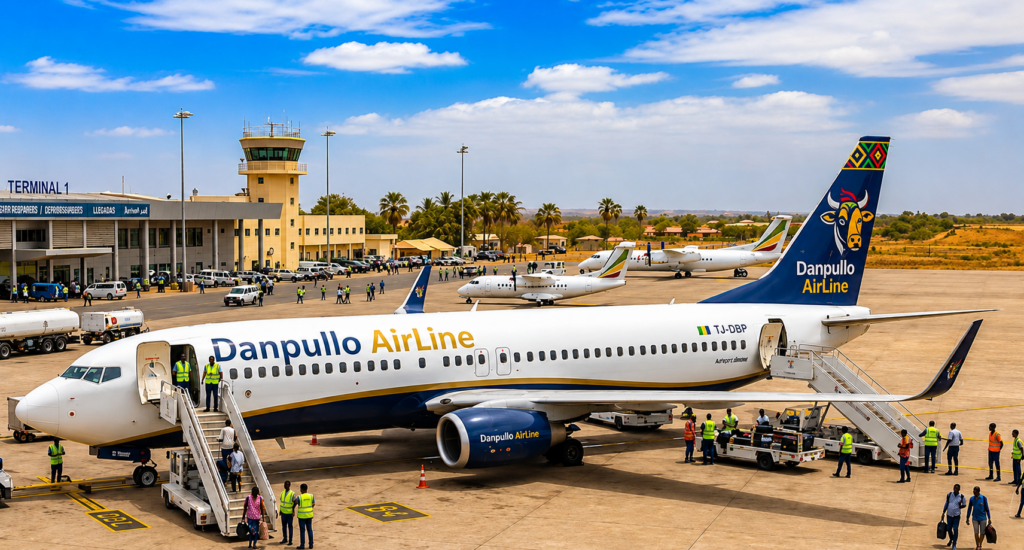
Cameroonian billionaire Baba Ahmadou Danpullo, widely regarded as Francophone Africa’s richest businessman, has announced plans to invest 500 billion CFA francs (approximately US$900 million) to launch Danpullo Air Line, a privately owned airline that aims to connect Cameroon’s ten regions before expanding throughout the six countries of the Central African Economic and Monetary Community (CEMAC). Even more remarkably, the project includes the construction of two privately owned airports in Yaoundé and Douala, making it one of the most ambitious privately financed aviation projects ever undertaken on the African continent. According to Business Insider Africa, the investment represents nearly the entire value of Danpullo’s estimated personal fortune.
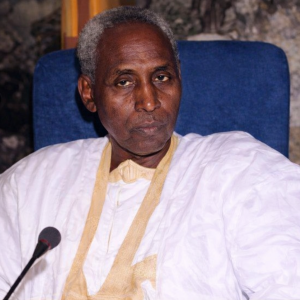
Who Is Baba Ahmadou Danpullo?
Baba Ahmadou Danpullo’s life reflects one of Africa’s most remarkable entrepreneurial journeys.

Born into a Fulani family in Cameroon’s Northwest Region, Danpullo began with modest means before building a business empire that now spans agriculture, telecommunications, transportation, logistics, and commercial real estate. Over several decades, he established himself as one of the continent’s most successful self-made entrepreneurs.
Among his flagship investments are Ndawara Tea Estates, one of Central Africa’s largest tea producers, and Nexttel, one of Cameroon’s leading mobile telecommunications companies. His investments also include transportation, logistics, commercial property, and agricultural enterprises throughout Central Africa and South Africa. These diversified businesses enabled him to accumulate an estimated fortune of about 547 billion CFA francs, placing him among Africa’s wealthiest individuals.
Now, Danpullo appears ready to stake almost everything on aviation.
Why Central Africa Needs Better Air Connectivity
Unlike West Africa, East Africa, or Southern Africa, Central Africa remains one of the least connected aviation regions in the world.
Although Cameroon, Chad, Gabon, Equatorial Guinea, the Republic of the Congo, and the Central African Republic all belong to CEMAC, direct flights between member states remain scarce. Business travelers frequently must connect through Paris, Addis Ababa, Casablanca, or other international hubs simply to travel between neighboring countries.
According to Business Insider Africa, this lack of connectivity has constrained regional trade, discouraged tourism, slowed investment, complicated business travel, and weakened economic integration among the more than sixty million people living within the CEMAC region. Danpullo Air Line hopes to bridge this gap by creating stronger domestic and regional air links centered on Cameroon.
A Private Solution to a Public Challenge
The timing of Danpullo’s announcement is significant.
Cameroon’s national carrier, Camair-Co, has struggled for years with aircraft shortages, operational disruptions, financial losses, and mounting maintenance costs. Like many state-owned airlines across Africa, it has found it difficult to maintain consistent schedules while remaining financially sustainable.
These challenges have renewed debate over whether governments should continue operating national airlines or instead encourage greater participation from private investors. Danpullo’s proposal reflects a growing trend across Africa in which successful entrepreneurs are investing in infrastructure traditionally financed by governments. Similar private investments have emerged in ports, logistics, energy production, transportation, and industrial development. His airline also aligns with broader continental initiatives such as the African Continental Free Trade Area (AfCFTA) and the Single African Air Transport Market (SAATM), both designed to improve the movement of people and goods across Africa.
Where Will the Financing Come From?
One of the most frequently asked questions concerns financing. Launching a modern airline while simultaneously constructing two airports requires enormous capital. The project will not rely solely on Danpullo’s personal fortune. Financing is expected to combine his own equity with investments from private institutional partners, international commercial lenders, and foreign banking institutions. This blended financing structure is common for large infrastructure projects because it spreads financial risk while attracting long-term capital from multiple sources.
The Enormous Risks
Few industries are as unforgiving as commercial aviation. History is filled with airlines, both public and private, that collapsed despite strong financial backing.
Danpullo Airlines will require enormous capital not only to acquire aircraft but also to train pilots, establish engineering facilities, maintain safety standards, purchase spare parts, insure operations, and manage airport infrastructure. The airline will also face the constant uncertainty of global fuel prices, which remain among the industry’s largest operating expenses. Because aircraft purchases, maintenance contracts, insurance, and many technical services are priced in U.S. dollars, fluctuations in exchange rates could significantly affect operating costs.
In addition, commercial aviation is one of the world’s most heavily regulated industries. Obtaining route rights, maintaining international safety certification, complying with aviation regulations, and negotiating bilateral air service agreements all require considerable expertise and sustained financial commitment.
Danpullo’s decision to build two privately owned airports further increases both the complexity and the financial exposure of the project. Very few African entrepreneurs have attempted an aviation investment of this magnitude.
Strong Competition Awaits
Danpullo Air Line will enter a highly competitive market from its very first day of operations.
Established international airlines such as Air France, Turkish Airlines, Brussels Airlines, and Royal Air Maroc already serve Cameroon and benefit from extensive route networks, experienced management, strong global brands, and significant financial resources. Regional airlines are likewise competing for a relatively limited passenger base.
To succeed, Danpullo Air Line will need to earn a reputation for reliability, operational efficiency, competitive pricing, excellent customer service, and strategic partnerships that allow it to expand sustainably throughout Central Africa.
Why the Project Could Change Central Africa
Despite the considerable risks, the potential rewards are equally significant.
A successful Danpullo airline could improve domestic connectivity throughout Cameroon while strengthening transportation links across the CEMAC region. Better air service would encourage tourism, facilitate trade, reduce travel times, stimulate investment, create thousands of direct and indirect jobs, and strengthen regional economic integration. It could also encourage additional private investment in transportation infrastructure throughout Central Africa, demonstrating that large-scale development projects need not depend exclusively on government financing.
More Than an Airline
Danpullo Air Line represents far more than the launch of another commercial carrier. It is a test of whether African private enterprise can solve structural challenges that governments have struggled to address for decades.
The investment is unquestionably risky. Aviation has humbled governments, multinational corporations, and billionaires alike. Yet history also shows that transformative infrastructure often begins with visionary entrepreneurs willing to accept extraordinary risks.
Whether Danpullo Air Line ultimately becomes a commercial success or a costly lesson, Baba Ahmadou Danpullo has already reshaped the conversation about private investment in African aviation. If his vision succeeds, it could mark the beginning of a new era in which African entrepreneurs not only build successful companies but also create the transportation networks that connect economies, facilitate commerce, and bring people closer together.
For Central Africa, whose skies have long reflected the region’s fragmented transportation system, Danpullo’s bold gamble may ultimately prove to be much more than a business venture. It could become a defining milestone in the region’s economic integration and a powerful example of what visionary African entrepreneurship can accomplish.
A Fulani Entrepreneur with a Continental Vision
For readers of Planet Fulbe, the story of Baba Ahmadou Danpullo carries an additional dimension. Beyond the scale of the investment, it reflects the growing influence of Fulani entrepreneurs in shaping Africa’s modern economy.
Historically, the Fulbe built their reputation through pastoralism, long-distance commerce, and regional trade networks that stretched across the Sahel and West Africa. As African economies evolved, many Fulani entrepreneurs successfully expanded into agriculture, transportation, banking, telecommunications, manufacturing, and real estate while preserving the entrepreneurial spirit that has long characterized Fulani society.
Danpullo’s remarkable rise from modest beginnings to becoming one of Francophone Africa’s wealthiest businessmen embodies this tradition of enterprise. His investments in tea production, logistics, telecommunications, commercial real estate, and now aviation illustrate how African entrepreneurs are increasingly moving beyond traditional sectors to tackle some of the continent’s most complex infrastructure challenges.
If Danpullo Air Line succeeds, its impact will extend well beyond Cameroon. Improved air connectivity could strengthen trade, tourism, education, and cultural exchange throughout Central Africa, creating new opportunities for millions of people. The project could also encourage other African investors to consider long-term investments in strategic infrastructure rather than relying solely on governments or foreign capital to finance the continent’s development.
At the same time, the venture serves as a reminder that visionary projects require more than financial resources. Their ultimate success depends on sound management, transparency, regulatory compliance, operational excellence, and the ability to earn the confidence of passengers and investors alike.
Whether Danpullo Air Line becomes one of Africa’s great business success stories or another cautionary tale in the challenging aviation industry, Baba Ahmadou Danpullo has already demonstrated an uncommon willingness to invest boldly in the future of his country and his region. In doing so, he has added another chapter to the story of Fulani entrepreneurship—one that reaches beyond commerce toward the broader goal of connecting people, expanding opportunity, and contributing to Africa’s economic transformation.
Sources
This article is based on reporting and analysis from the following sources:
Forbes Afrique. Reporting on the financial scale of Danpullo’s proposed aviation investment and the broader outlook for private aviation in Central Africa.
Business Insider Africa. Cameroon’s Richest Man Is Risking Almost His Entire Fortune on a $900 Million Airline to Fix Central Africa’s Connectivity Problem. July 2026.
Billionaires Africa. Coverage of Baba Ahmadou Danpullo’s investment in Danpullo Air Line and the planned construction of private airports in Cameroon.
Financial Afrik. Analysis of Danpullo’s investment strategy and financing plans for the airline and airport project.
About Post Author